Living in El Palo, Málaga: a fishing quarter by the beach
Living in El Palo, Málaga: the beach, fishing boats, sardine espetos and the city's east end. Three addresses on Elcano, Salvador Allende and Almería.
Score your own address
Everything this article covers, you can check on your own address: free, in a minute.
Free. The score at once, the full report after an e-mail sign-in.
Contents 14 sections
What kind of place it is
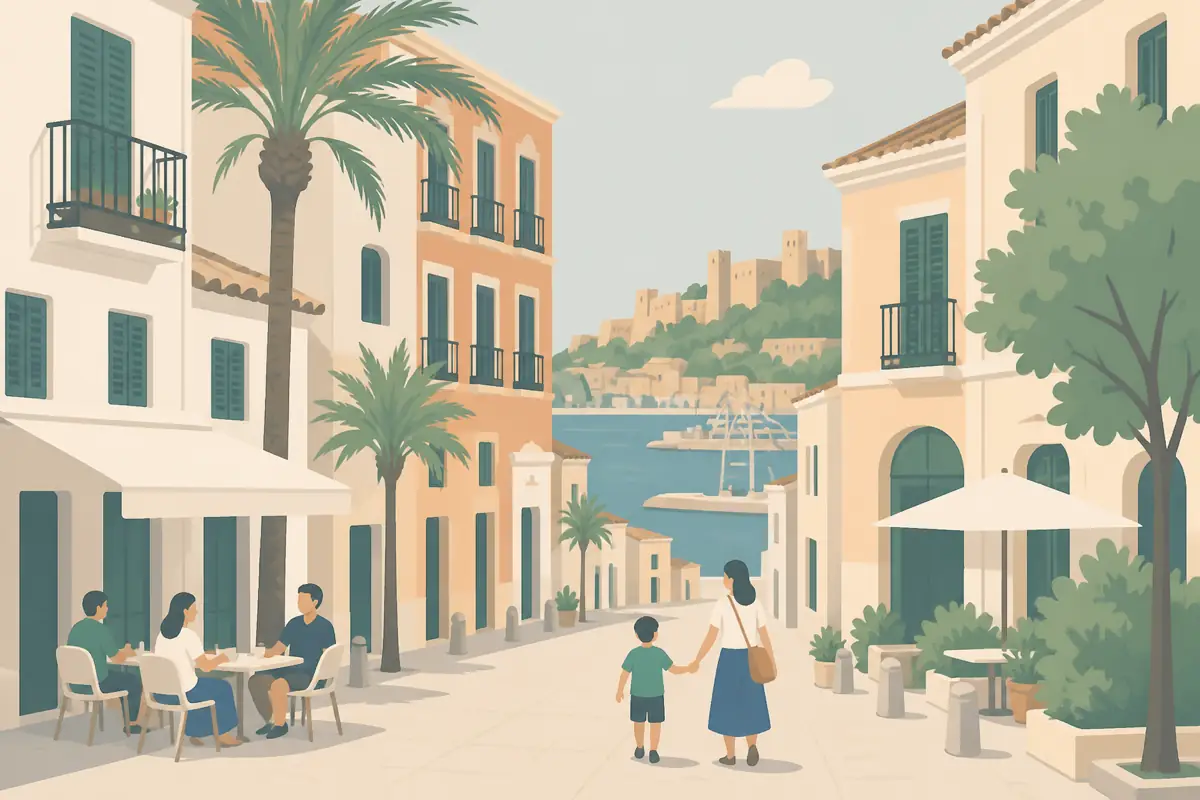
El Palo is an old fishing quarter at the eastern end of Málaga's seafront. Boats lie on the sand, and the beach restaurants grill sardines on skewers over embers, a dish called espeto.
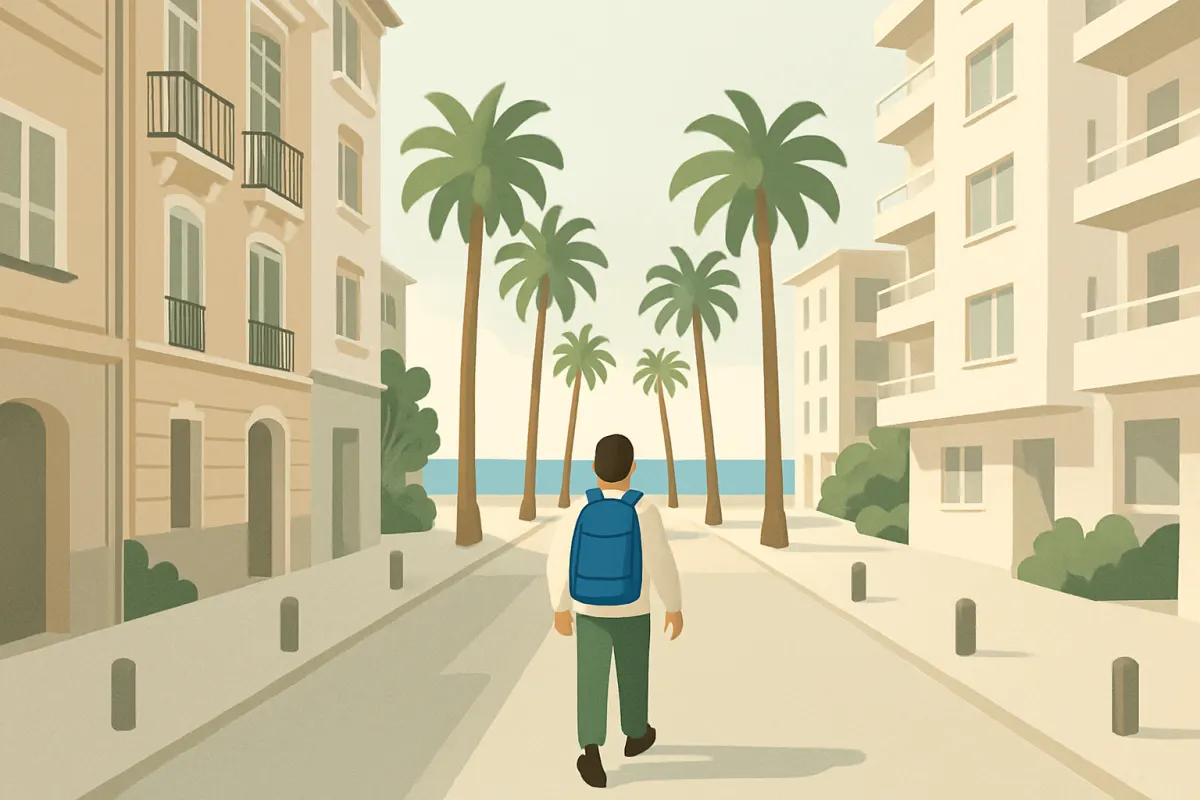
The quarter grew out of a fishermen's village and still looks like one. Low houses line the sea, while apartment blocks and villas climb the slopes behind.
Errands on foot
The streets near the beach have a market, grocers, pharmacies and bars. Schools, a health centre and sports grounds sit further inland.
The metro does not reach El Palo. Buses run along the seafront into central Málaga, and at rush hour the trip drags.
What we measured
Our three addresses are on Avenida Juan Sebastián Elcano, Avenida Salvador Allende and Calle Almería.
| Address | Score | Groceries | Station or stop | School | Park | Noise and air |
|---|---|---|---|---|---|---|
| Avenida Juan Sebastián Elcano, 150 | 78.1 | 5 min | 1 minElcano - Enrique Florido | 3 min | 7 min | −7.2 |
| Avenida Salvador Allende, 100 | 78.2 | 4 min | 1 minAllende - Santarén | 3 min | 2 min | −7.2 |
| Calle Almería, 20 | 78.4 | 2 min | 3 minCarretera de Almería - Edificio Bahía | 5 min | 5 min | −7.2 |
Map and table share their numbering. Plus zooms in.
How we score these three addresses is set out on How the score works.
Who it suits
- Families keen on a home steps from the water.
- Retirees who like a slow pace.
- Remote workers.
The downsides
The centre is a long walk away. In summer the beach is packed and parking is nearly impossible. Some of the old houses are small and dark.
The housing
Low fishermen's houses by the sea, seventies apartment blocks and villas on the slopes. Flats near the beach cost more than those further back.
Many flats are let to tourists, and in summer a long-term rental is harder to find, so autumn is the better time to look.
What to check
Look out for a bar nearby that plays music late, and ask whether the neighbouring flats are holiday lets. Time the walk to the bus stop.
With children
Families mostly spend time on the beach and the promenade. Schools are close, and in summer children learn to swim right outside their door.
Summer and winter
Winters are mild, and people stroll by the sea all year. Summers are loud and crowded with holidaymakers.
Getting to work
Most residents work in the centre or the west of the city. The seafront bus is slow but direct. By car the ring road is the easier route.
Without a car
For everyday errands you do not need a car, though exploring the province is far easier with one.
Language and neighbours
Neighbours are mostly locals, many from families that have been here for generations. Day to day you cannot get by without Spanish; English is understood mainly in the beach bars.
Buying here
To buy property in Spain a foreigner needs an NIE number and a Spanish bank account. When buying a flat by the sea, check whether the building falls within the protected coastal zone, because that decides what renovation and alterations you will be allowed later.
Neighbours
To the west lies Pedregalejo, and closer still to the centre, El Limonar. We have pages on both.
Questions
Is El Palo a good place to live?
Yes, if you want to live by the sea in a quarter that still looks like a fishing village: boats on the sand, espeto in the beach restaurants, a market nearby. But central Málaga is a bus ride away, the beach is packed in summer, and the old houses by the water can be small and dark.
How do you get from El Palo to central Málaga?
By bus along the seafront, as the metro does not reach the quarter. During the day the trip is bearable, but at rush hour it drags, so when choosing a flat it is worth timing the walk to the bus stop.
Can you rent long-term in El Palo?
Yes, but it is hard in summer, because many flats are let to tourists. Autumn is the better time to look. Flats by the beach cost more than those higher up the slope, and before signing check there is no bar nearby playing music late.
Is El Palo good for families with children?
Yes. Schools are close, children play on the beach and the promenade, and in summer they learn to swim right outside their door. Just bear in mind that in summer plenty of holidaymakers arrive and the quarter gets noisier.