Living in central Mar del Plata: Bristol, casino, towers
Living in central Mar del Plata: San Martín, Rivadavia and Pedro Luro a few blocks from the shore; Bristol beach and Plaza San Martín walked.
Score your own address
Everything this article covers, you can check on your own address: free, in a minute.
Free. The score at once, the full report after an e-mail sign-in.
Contents 13 sections
What the district is like
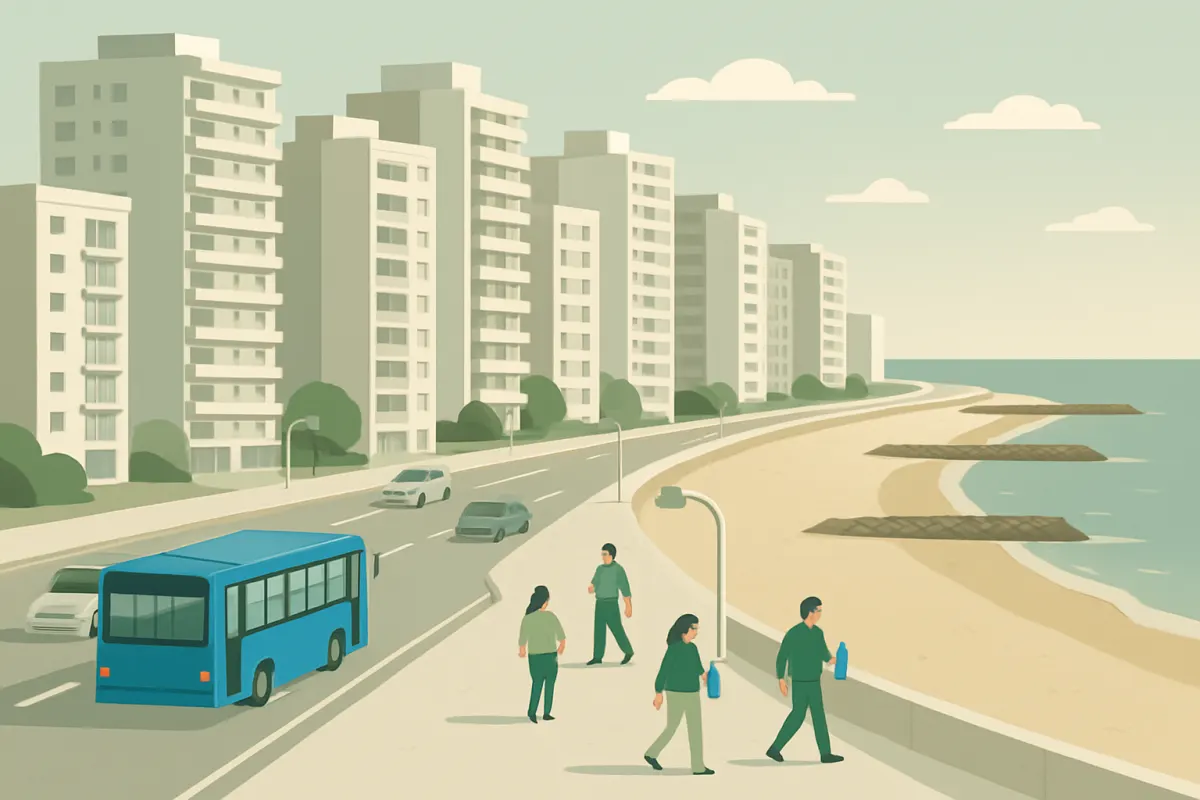
All of Argentina knows central Mar del Plata from postcards: the casino and hotels above Playa Bristol, the stone promenade with its sea lion statues, and the wall of apartment towers behind them.
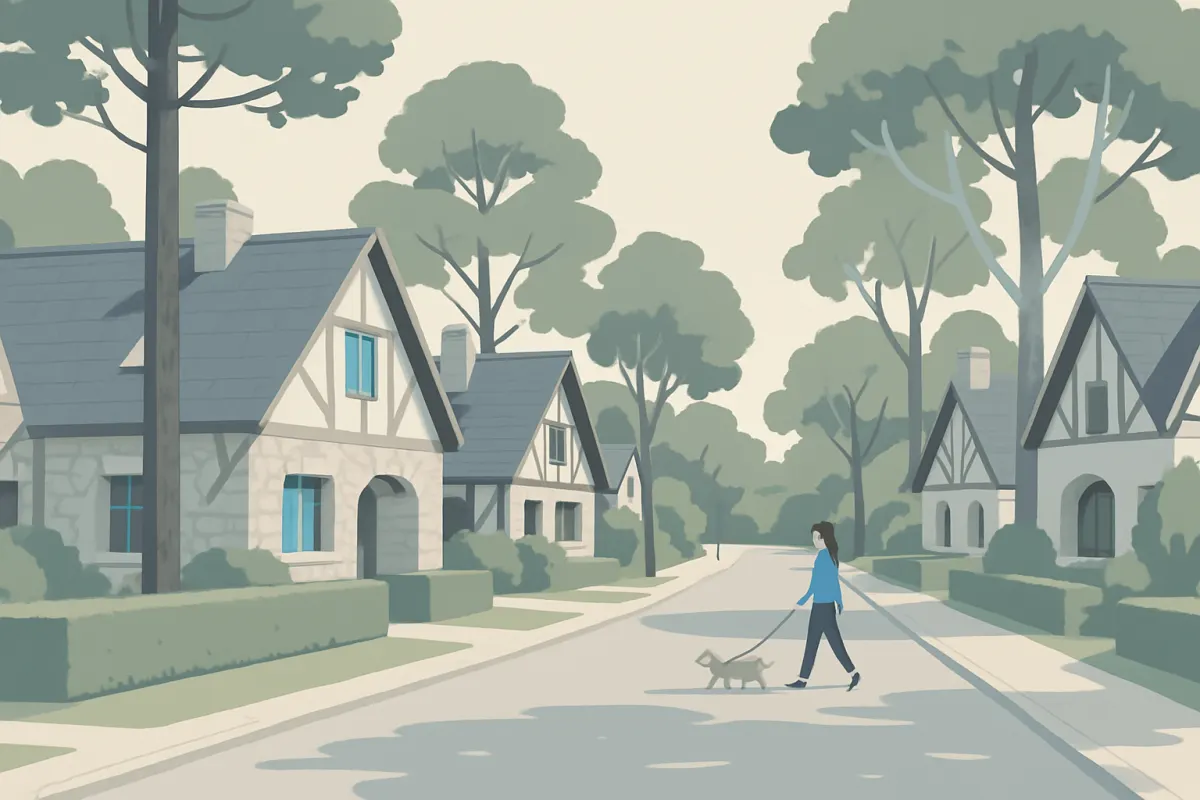
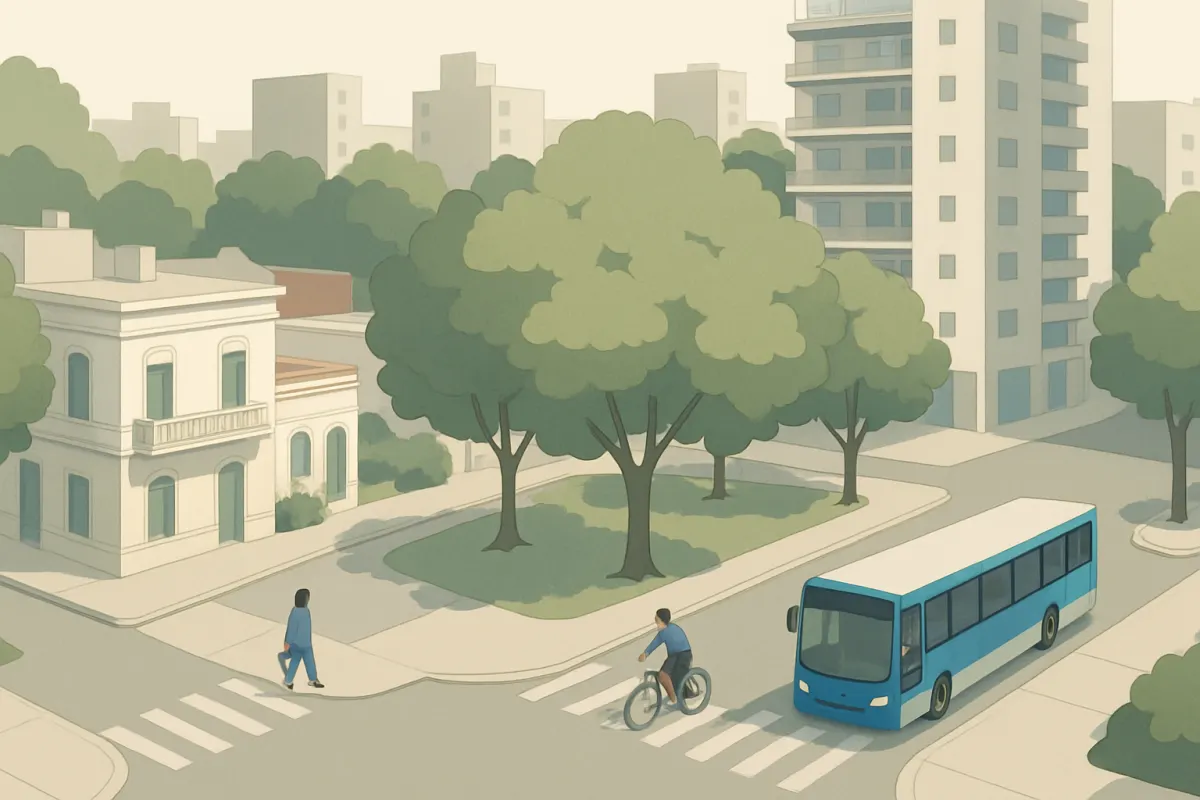
Inland from the shore runs the pedestrian Calle San Martín, leading to the main square and the cathedral. Around it is an ordinary city centre with shops, banks and theatres.
Errands on foot
Shops, cinemas, theatres and clinics are all close together in the centre, and buses leave from here for every neighbourhood. From any building you can walk to the beach.
Greenery is limited to Plaza San Martín, Plaza Colón and the promenade. In summer the crowds here are the densest in the country; in winter the streets are empty.
What we measured
We took Calle San Martín, Calle Rivadavia and Avenida Pedro Luro.
| Address | Score | Groceries | Station or stop | School | Park | Noise and air |
|---|---|---|---|---|---|---|
| Peatonal San Martín, 2500, Mar del Plata | 66.8 | 4 min | 5 minPlaza San Martín | 7 min | 3 min | −0.2 |
| Rivadavia, 2500, Mar del Plata | 65.0 | 3 min | 6 minPlaza San Martín | 9 min | 5 min | −0.2 |
| Avenida Pedro Luro, 2500, Mar del Plata | 60.0 | 3 min | 3 min523 | 6 min | 3 min | −7.9 |
Numbers link the pins to table rows. Plus zooms in.
The three addresses are a few blocks from the shore and from one another. How minutes turn into a score is explained on How the score works.
Who it suits
- Retirees.
- Students.
- People who live in the city for part of the year.
What you give up
In January and February the centre is overrun. The rest of the year many flats stand empty, and in the evening few windows light up in the towers. The towers themselves are ageing. Locals say they live in two different cities, one in summer and one in winter.
The housing
Towers from the sixties to the eighties with small holiday flats. There are some older buildings and a few new ones.
What to check
If you plan to rent or buy a flat in central Mar del Plata, check the heating, the lifts and the size of the building fees. Ask how many people live in the building over the winter.
With children
Schools are close, and the beach is at the end of the street.
Winter and summer
Summer is loud and crowded. Winter is windy, and the city gets on with normal life: theatres, cafes and the university.
Getting around
Buses fan out from the centre across the whole city. The railway station and the bus terminal are away from the shore.
The city around it
Generations of Argentines have spent their holidays in Mar del Plata. Out of season it is a working city with a fishing port.
Without a car
In central Mar del Plata a car is unnecessary.
In summer there is nowhere to park, and locals leave their cars at home during the season. In winter there is room for everyone. Direct buses go to the port, the university and the southern beaches, and trains and long-distance coaches run to Buenos Aires. Many owners of central flats live in the capital and come down for the weekend, so on Friday evenings the towers noticeably come to life.
Neighbours
La Perla lies to the north, and Los Troncos to the south, on higher ground.
Questions
Is central Mar del Plata a good place to live all year round?
Yes, as long as the summer crowds don't put you off. In winter the centre carries on as a normal city, with theatres, cafes and the university, and shops and clinics close by. But in January and February it is packed, and out of season many flats in the towers stand empty.
Do you need a car in central Mar del Plata?
No. Buses leave from here for every neighbourhood, with direct routes to the port, the university and the southern beaches. In summer there is nowhere to park, and locals leave the car at home themselves; in winter there is room for everyone.
What kind of housing is there in central Mar del Plata?
Mostly towers from the sixties to the eighties with small flats built for holidays. There are some older buildings and a few new ones. Before signing, check the heating, the lifts and the building fees, and ask how many people live in the building over the winter.
How do you get from central Mar del Plata to Buenos Aires?
By train or long-distance coach: the railway station and the bus terminal are away from the shore. Many owners of flats in the centre live in the capital and come down for the weekend, which is why the towers come to life on Friday evenings.