Living in central Mendoza: five plazas and the acequias
Living in central Mendoza: San Martín, Las Heras and Peatonal Sarmiento; five plazas instead of parks, the market a walk away, light rail across town.
Score your own address
Everything this article covers, you can check on your own address: free, in a minute.
Free. The score at once, the full report after an e-mail sign-in.
Contents 12 sections
What the area is like
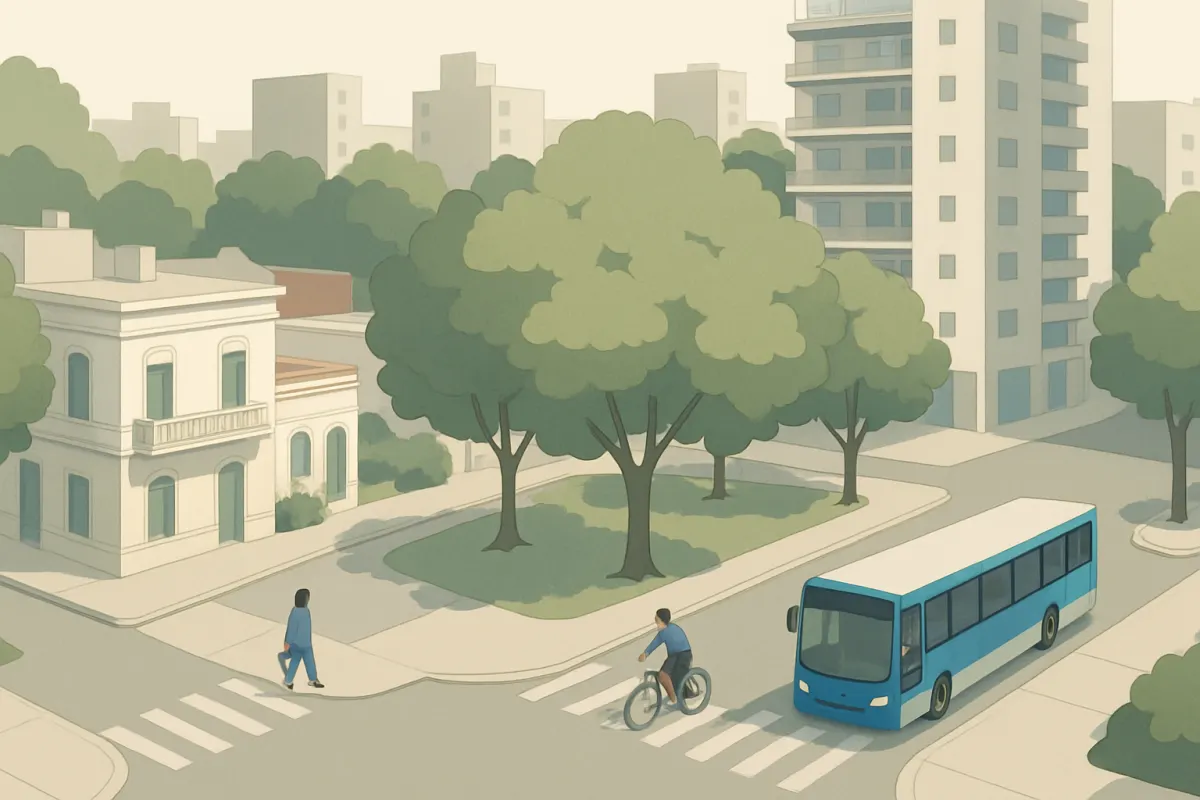
Central Mendoza was laid out afresh after the nineteenth-century earthquake. In the middle is the large Plaza Independencia, and at the corners of an imaginary square around it sit four smaller plazas, each one different.
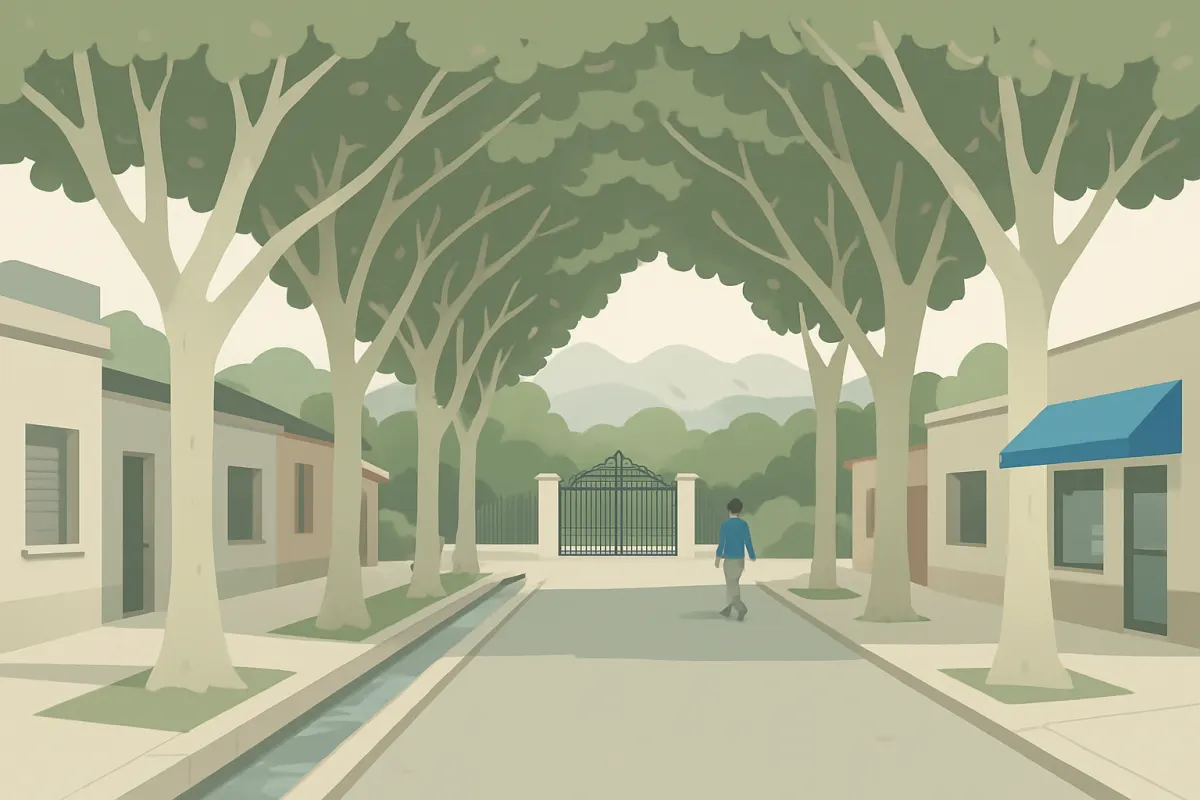
The city stands in a desert at the foot of the Andes, and its greenery depends on irrigation channels, the acequias. An open channel runs along every street, watering rows of plane trees and poplars. In summer their crowns meet above the road.
On foot
The centre is flat and shady, easy to walk around. Shops on Avenida San Martín and Avenida Las Heras, the Peatonal Sarmiento pedestrian street with its cafes, the market, banks and university buildings are all close together.
Plazas take the place of parks. The big park on the western edge is a walk or a bus ride away. A light rail line, the Metrotranvía, crosses the city.
What we measured
We scored Avenida San Martín, Avenida Las Heras and the Peatonal Sarmiento.
| Address | Score | Groceries | Station or stop | School | Park | Noise and air |
|---|---|---|---|---|---|---|
| Avenida General San Martín, 1100, Mendoza | 69.5 | 3 min | 5 min | 6 min | 1 min | −7.2 |
| Avenida Juan Gregorio de Las Heras, 300, Mendoza | 73.0 | 3 min | 1 min | 1 min | 2 min | −5.2 |
| Sarmiento, 50, Mendoza | 78.1 | 3 min | 4 min | 7 min | 1 min | −0.5 |
Map numbers line up with table rows. To zoom in, press plus.
With five plazas nearby, the centre does well in the Park column. The rest is explained on How the score works.
Who it suits
- Students.
- Professionals.
- Remote workers who came for the mountains and the wine.
The trade-offs
There is a lot of traffic during the day. At siesta time after lunch, and late in the evening, the streets empty and shops close. The residential buildings are old. Locals advise newcomers simply to get used to the local timetable.
The housing
Low-rise houses and towers from the sixties to the eighties. Because of earthquakes, the city was kept low for a long time. New buildings are designed to withstand tremors and cost more.
What to check
If you want to rent a flat in central Mendoza, find out when the building went up and whether the windows face an avenue. And watch your step: the acequias are open, and you have to step over them.
With children
The plazas have playgrounds and fountains, schools are near, and the streets are quiet during the siesta.
Winter and summer
Summer is dry and hot, but bearable in the shade of the trees. Winter is sunny with cold nights, and now and then a warm, dry wind, the zonda, blows down from the mountains.
Getting around
Buses and the light rail link the centre with the neighbouring municipalities.
Without a car
In central Mendoza you can live without a car. You only need one for trips to the mountains and the wineries.
For short trips there is bike hire and cycle lanes along the main avenues. The city is not big, and the light rail or a bus reaches any part of it without changing. Taxis are cheap and arrive quickly.
Neighbours
To the west is Quinta Sección, the most expensive part of the city. To the south is Godoy Cruz, a separate municipality.
Questions
Is central Mendoza a good place to live?
Yes, if you want to manage without a car: the streets are flat and shady, the shops, market, banks and cafes on Sarmiento are close, and a light rail line crosses the city. In return you get old buildings, heavy daytime traffic and an unfamiliar timetable with a siesta, when shops shut.
What kind of housing is there in central Mendoza?
Low-rise houses and towers from the sixties to the eighties: because of earthquakes, the city did not build upwards for a long time. New buildings are designed for tremors and cost more. Before renting, ask what year the building went up and check whether the windows face an avenue.
How do you get around Mendoza without a car?
On foot in the centre, and beyond it by light rail and buses, which link the centre with the neighbouring municipalities. For short trips there is bike hire and cycle lanes along the avenues. You will only really need a car for trips to the mountains and the wineries.