Living in Palma old town: inside the Avenidas ring
Living in Palma old town: the cathedral, Sant Miquel, the Olivar market and the station at Plaça d'Espanya. Who it suits, the catches, three addresses.
Score your own address
Everything this article covers, you can check on your own address: free, in a minute.
Free. The score at once, the full report after an e-mail sign-in.
Contents 10 sections
The old town
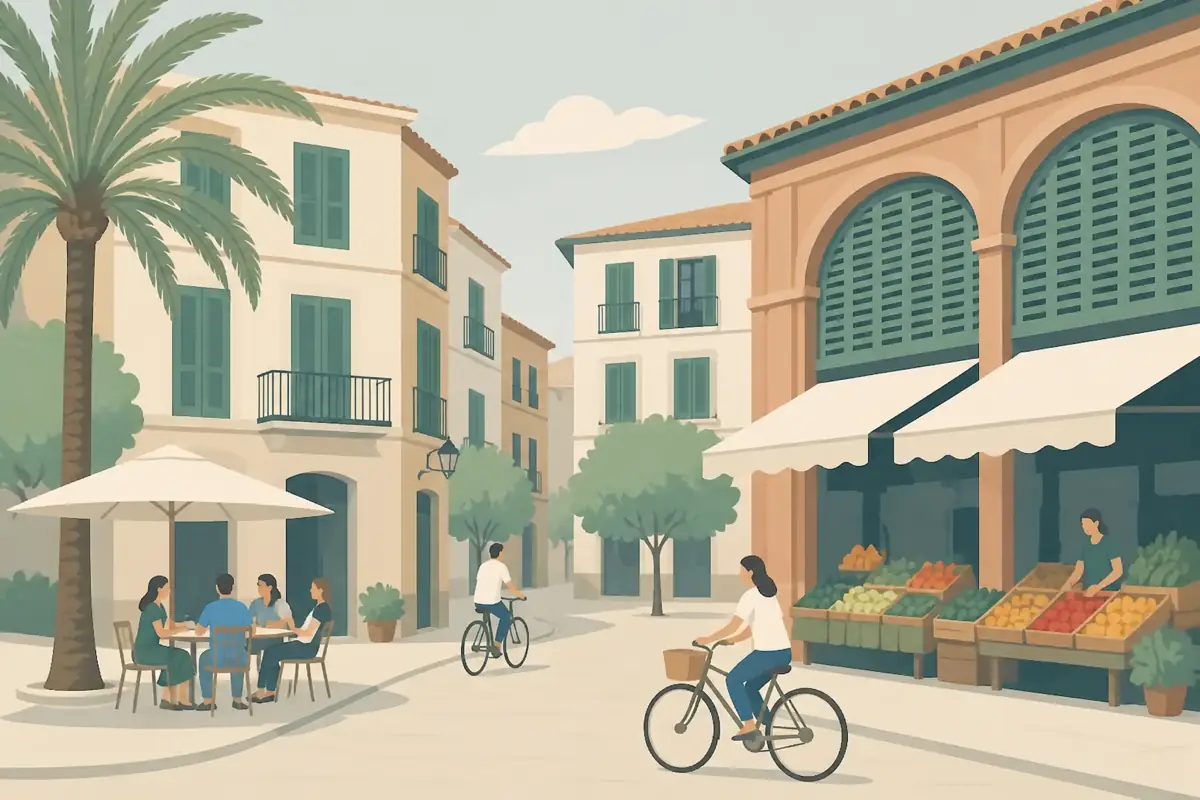
The centre of Palma is the old town inside the Avenidas, the ring of boulevards laid where the city walls once stood. The cathedral, La Seu, looks over it; La Llotja, the shopping street of Sant Miquel and the covered Olivar market are all a short walk apart.
It is not only a place for visitors. Local families and retirees live in the old houses, and more and more foreigners who bought on the island have joined them. Offices, schools and clinics are mostly within walking distance.
Daily life on foot
A car is more of a burden than a help here. Many streets are pedestrian or open only to residents' cars. People shop at the Olivar market and in small corner stores, and in the evening the squares fill up.
Plaça d'Espanya has both the railway station and the bus station: trains run inland, a metro line goes to the university, and the red EMT city buses reach every district. Can Pere Antoni, the nearest city beach, is a walk along the Parc de la Mar.
What we measured
We scored homes on Carrer de Sant Miquel, on Carrer de Sant Feliu near La Llotja and on Carrer del Sindicat in the eastern part of the old town.
| Address | Score | Groceries | Station or stop | School | Park | Noise and air |
|---|---|---|---|---|---|---|
| Carrer de Sant Feliu, 10, Palma de Mallorca | 90.3 | 3 min | 3 minPl. de la Reina - Catedral | 3 min | 2 min | −0.5 |
| Carrer de Sant Miquel, 30, Palma de Mallorca | 95.4 | 3 min | 4 minLa Rambla / Carrer dels Horts | 3 min | 3 min | −0.5 |
| Carrer del Sindicat, 50, Palma de Mallorca | 95.0 | 1 min | 2 minSindicat - Àrea d'intercanvi Sindicat | 4 min | 6 min | −0.5 |
Each dot on the map is a row of the table.
More on How the score works.
Who it suits
- People with a job in the old town who would rather walk to work.
- Retirees who like having doctors, a market and cafés downstairs.
- Buyers looking for an old house with an inner courtyard.
The trade-offs
Is the old town a good place to live? That depends on your patience with crowds. From April to October cruise passengers fill the streets, and the bars around La Llotja stay loud late. Many flats are let to tourists by the night, which pushes up rents for people who live here all year.
Summer and winter
In summer the old town runs on a tourist timetable: shops on Sant Miquel stay open late, there are queues at the cathedral, and locals keep indoors in the afternoon heat. In winter the cruise ships thin out, Mallorquí is heard again in the streets, and the centre feels like an ordinary provincial town with a market, churches and coffee bars.
Stone walls keep flats cool in July, but the same flats can be damp and chilly in January, and old buildings often have only electric heaters. Ask the owner about heating before you sign.
The housing
Mostly stone buildings of three to five floors, some of them old town palaces split into flats. Lifts are far from universal, and a building with its own parking is rare. There are very few new buildings.
What to check
Ask whether there is a lift and whether cars may enter your street. Come back on a Friday night to hear the bars. Find out how many flats in the building are holiday lets.
Children and getting around
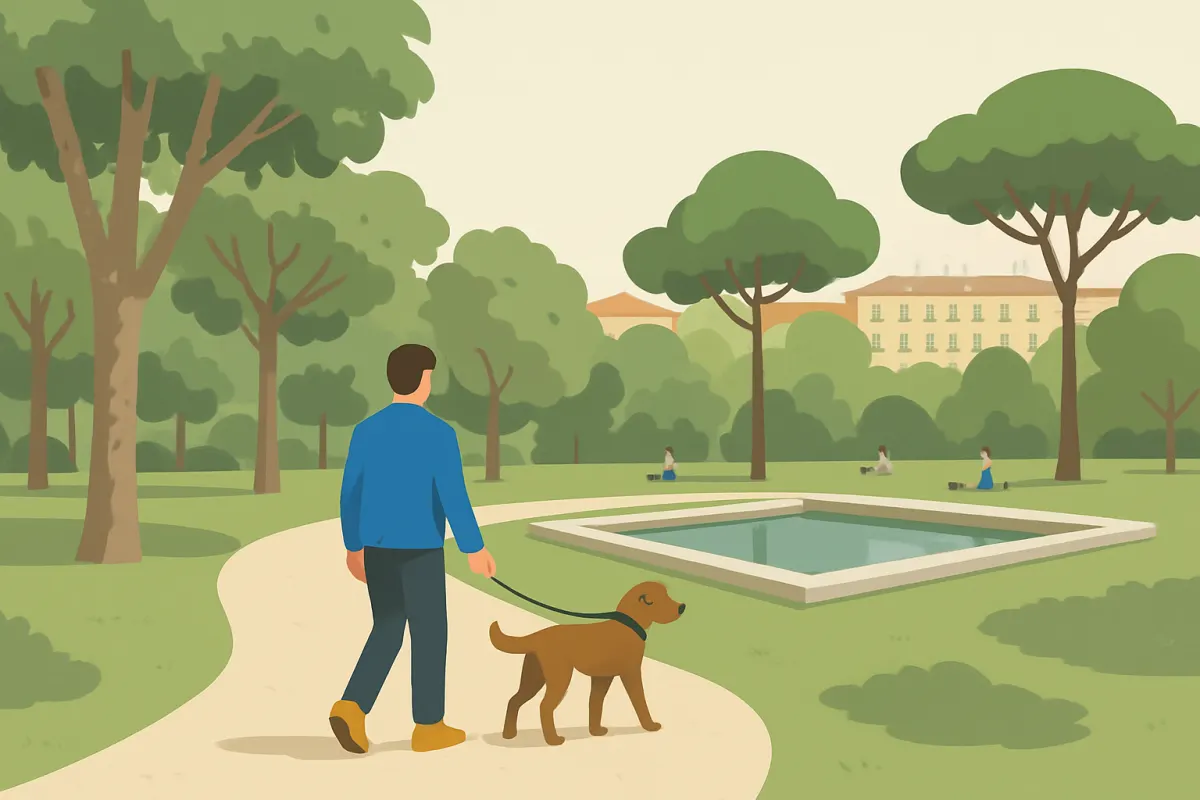
Families take children to the Parc de la Mar below the cathedral and to the playgrounds in the squares. Living without a car is easier here than anywhere else in Palma: everything is close and the station links you to the rest of Mallorca.
Neighbours
West across the boulevard is Santa Catalina; east beyond the ring lies Pere Garau.
Questions
Is Palma old town a good place to live?
Yes, if you want work, doctors, the Olivar market and cafés all within a walk. The cost is crowds: from April to October cruise passengers fill the streets, bars near La Llotja stay loud late, and holiday lets push rents up.
Can you live in the centre of Palma without a car?
Easily, more so than anywhere else in the city. Many streets are pedestrian or open only to residents' cars, and Plaça d'Espanya brings together the railway and bus stations, the metro to the university and EMT buses to every district.
What is housing like in Palma old town?
Usually a flat in a stone building without a lift, sometimes in an old palace divided into homes. Own parking is rare. Thick walls keep rooms cool in July, but in winter these flats can be damp and chilly, so ask about heating first.