Living in El Terreno, Palma: a hillside above the bay
Living in El Terreno, Palma: a hillside above the Paseo Marítimo below Bellver Castle, once the artists' quarter, with views over the bay.
Score your own address
Everything this article covers, you can check on your own address: free, in a minute.
Free. The score at once, the full report after an e-mail sign-in.
Contents 10 sections
A quarter on the slope
El Terreno is a Palma district on the slope between the Paseo Marítimo and the pine woods around Bellver Castle. In the early twentieth century wealthy families built summer villas here; later painters and writers settled, and the area had a bohemian name.
Today the old villas stand next to apartment blocks whose windows look out over the bay and the port. Avinguda de Joan Miró runs through the district.
Day to day
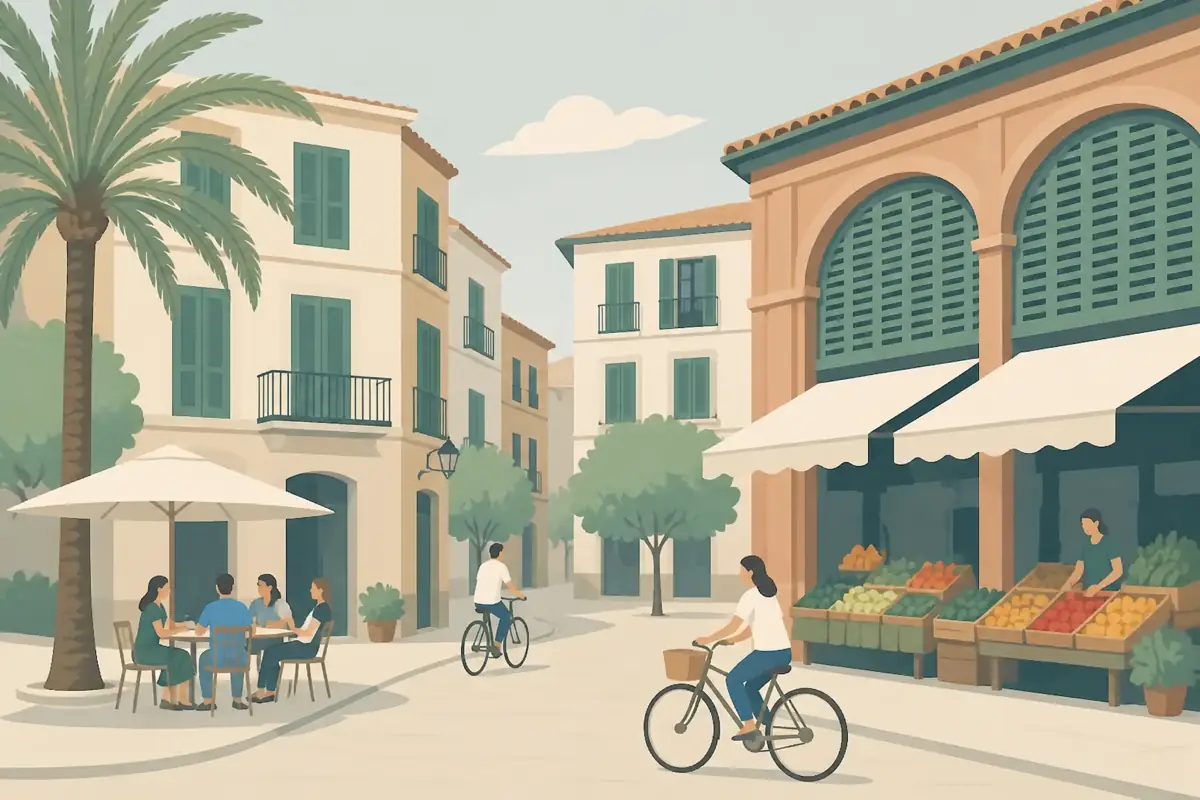
Shops, cafés and pharmacies line Avinguda de Joan Miró and Plaça Gomila at the bottom of the hill. Higher up it is quieter: houses, and stairs that climb towards the woods.
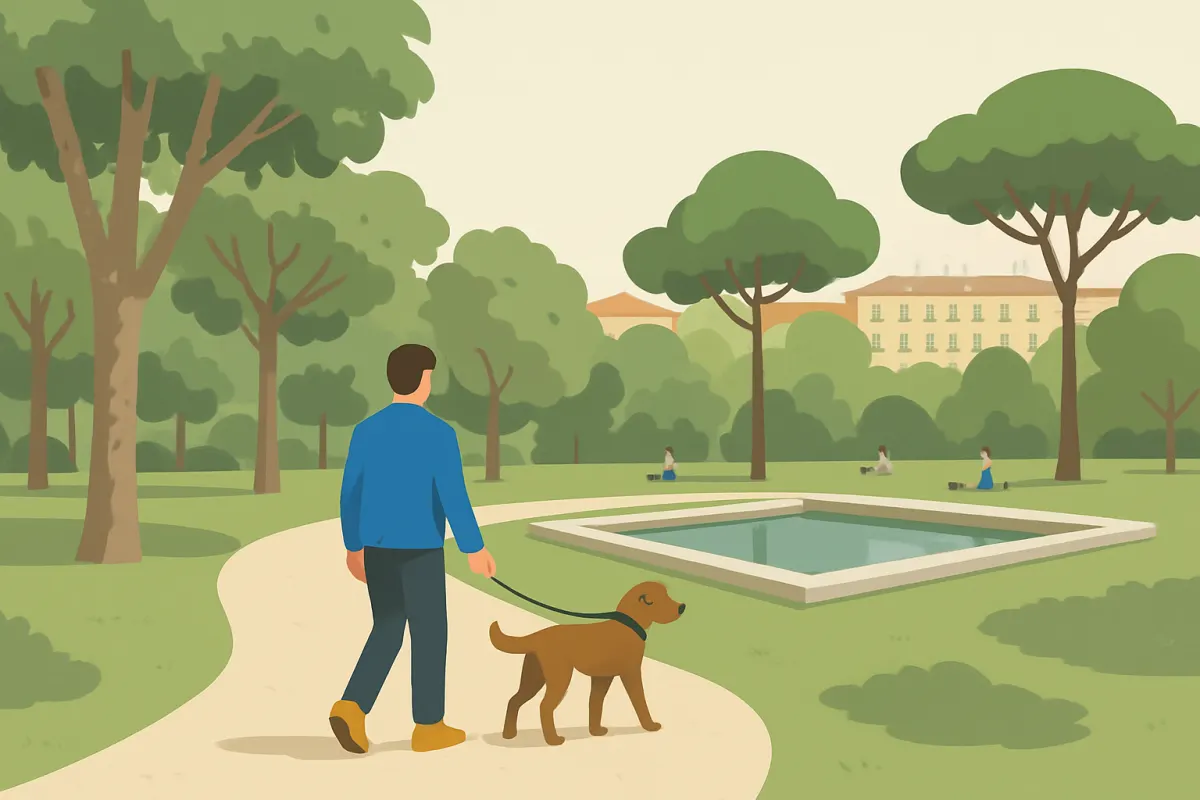
Trails through the Bellver woods lead up to the castle and are popular with dog owners. Santa Catalina and the seafront are a walk downhill, and EMT buses run along Joan Miró and the Paseo Marítimo.
The addresses we scored
We scored homes on Avinguda de Joan Miró, Carrer de Bellver and Carrer de Robert Graves.
| Address | Score | Groceries | Station or stop | School | Park | Noise and air |
|---|---|---|---|---|---|---|
| Avinguda de Joan Miró, 40, Palma de Mallorca | 70.7 | 2 min | 1 minPlaça Gomila | 3 min | 4 min | −3.2 |
| Carrer de Bellver, 10, Palma de Mallorca | 71.5 | 3 min | 2 minPlaça Gomila | 2 min | 2 min | −0.5 |
| Carrer de Robert Graves, 10, Palma de Mallorca | 71.7 | 3 min | 2 minPlaça Gomila | 4 min | 4 min | −0.8 |
Table rows and map dots share their numbers.
The scoring is described on How the score works.
Who it suits
- Expats who want a sea view with the city close by.
- Couples without children.
- People who like walking in the woods.
Trade-offs
The streets are steep, which is hard work with shopping bags or a pushchair. Many buildings are old and need work. Plaça Gomila at the foot of the hill has nightclubs and bars with a seedy reputation, and at weekends it is loud until morning.
A little history
One of the streets is named after Robert Graves, the English poet who spent most of his life on Mallorca. In the sixties and seventies Plaça Gomila was one of the best-known nightlife spots on the island. The district then ran down, and is now slowly coming back: old villas are being bought and restored, and small cafés are opening.
That means a flat with a view can cost less than one on the seafront, but old buildings bring more surprises. Life in El Terreno depends a lot on where exactly on the slope the house stands.
The housing
Villas from the early twentieth century, some split into flats, and blocks from the sixties and seventies with balconies facing the sea. New builds are few.
What to check
Walk from the door to the bus stop and the nearest shop: on a hill this decides a lot. If the flat is low on the slope, find out whether the noise from Plaça Gomila carries. Ask whether there is somewhere to park. Many homes sit above the avenue and are reached by steps rather than a street, which is lovely to look at but tiring every day.
Children and the car
Families walk in the Bellver woods and along the promenade. You can manage without a car if you live near Avinguda de Joan Miró; higher up it gets harder.
Neighbours
Downhill to the east is Santa Catalina; further west along the coast is Cala Major.
Questions
Is El Terreno a good place to live?
It is for people who want a view of the bay, the Bellver woods nearby and the city close at hand. The streets are steep, many buildings need work, and Plaça Gomila below is loud until morning at weekends. Where on the slope you live decides a lot.
Can you live in El Terreno without a car?
Near Avinguda de Joan Miró, yes: shops, cafés and EMT buses are there, and Santa Catalina and the seafront are a walk downhill. Higher up the slope it gets harder, especially when the house is reached by steps.
What kind of homes are there in El Terreno?
Early twentieth-century villas, some divided into flats, and blocks from the sixties and seventies with balconies facing the sea. New builds are scarce. A flat with a view can cost less than one on the seafront, but older buildings bring more surprises.