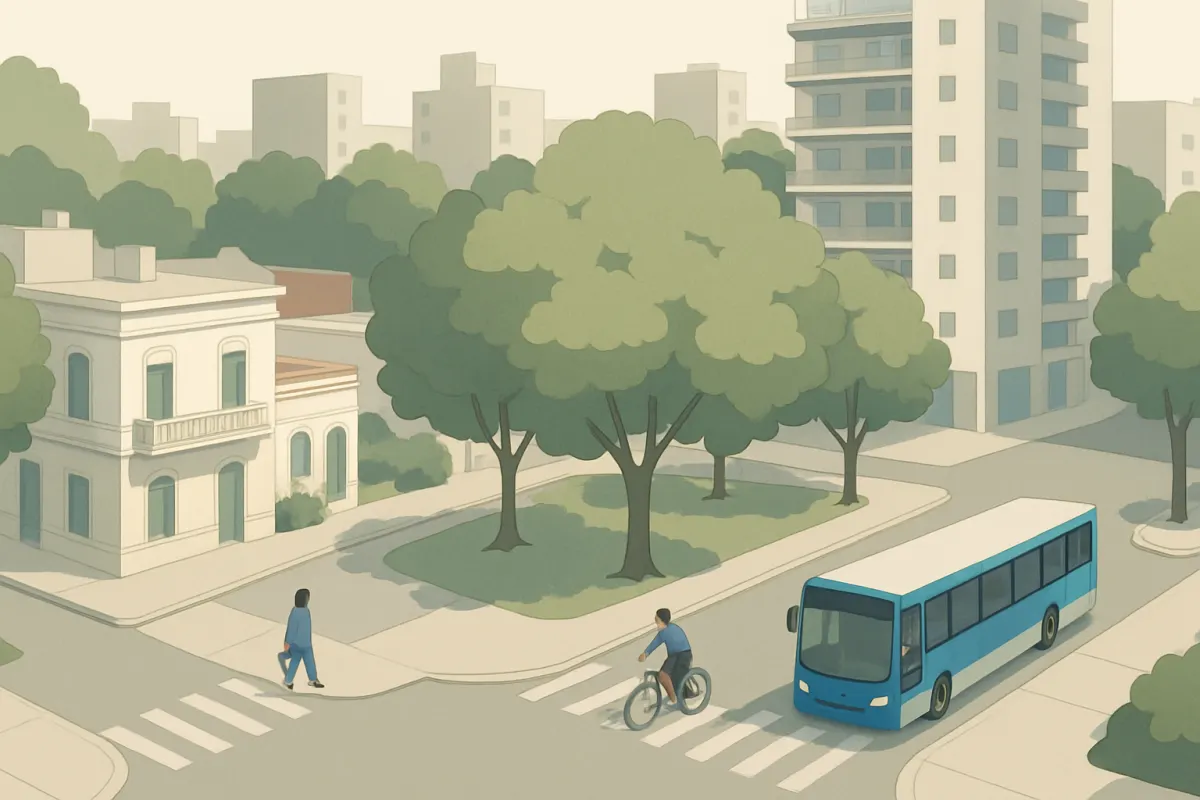
Living in downtown Rosario: Flag Memorial to Oroño
Living in downtown Rosario: Córdoba, San Martín and Santa Fe, the three main streets; walks to the riverside parks and Parque Independencia.
Score your own address
Everything this article covers, you can check on your own address: free, in a minute.
Free. The score at once, the full report after an e-mail sign-in.
Contents 13 sections
What downtown is like
Downtown Rosario is a grid of streets between the Paraná River and Bulevar Oroño. By the river stands the National Flag Memorial, the city's main symbol. From there Córdoba Street runs inland; part of it is closed to cars and given over to shops.
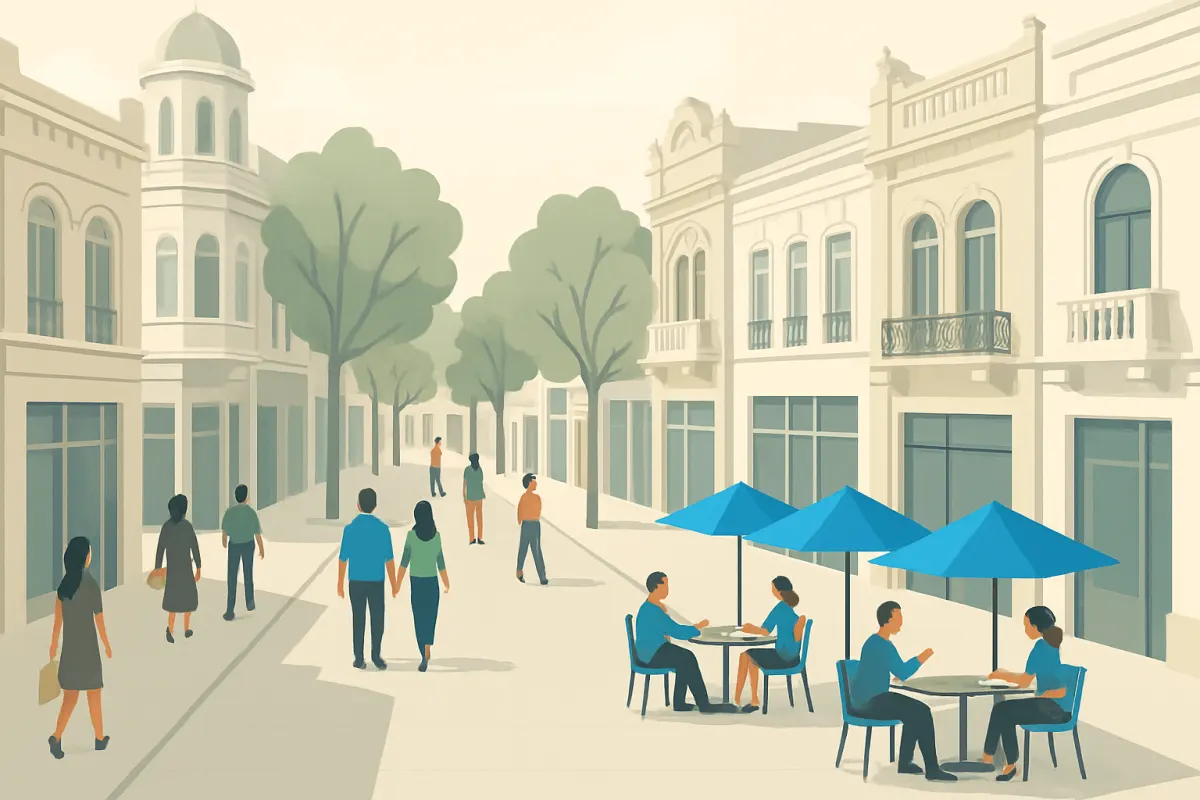
Rosario grew as a port shipping out grain, and the wealth of that era shows in the façades: banks, the stock exchange, mansions on the palm-lined boulevard.
Everyday errands
Downtown has everything: shops, theatres, university faculties, clinics, a café on every corner. The city is flat and distances are small.
What locals are proudest of is the riverfront. A chain of parks runs along the Paraná, and you can walk it for kilometres. In the other direction, past the boulevard, lies the large Parque de la Independencia with its lake and stadium.
What we measured
We scored addresses on Córdoba, San Martín and Santa Fe, the three main streets of the business district.
| Address | Score | Groceries | Station or stop | School | Park | Noise and air |
|---|---|---|---|---|---|---|
| Peatonal Córdoba, 1100, Rosario | 90.8 | 3 min | 2 min4591 | 7 min | 6 min | −0.1 |
| Peatonal San Martín, 800, Rosario | 90.3 | 3 min | 2 min1805 | 8 min | 4 min | −0.1 |
| Santa Fe, 1200, Rosario | 87.1 | 3 min | 2 min5603 | 3 min | 7 min | −3.8 |
Map and table share the same numbers. Tap plus to zoom.
All three addresses are in the densest part of the city. How the score works shows how the calculation weighs shops, parks and noise.
Who it suits
- Students.
- Professionals who work downtown.
- Older people who are happy without a car.
The downsides
The business district empties in the evening, and walking there at night feels uneasy. The buildings are old. By day there are lots of cars and buses. Downtown residents advise choosing streets closer to the boulevard or the river.
Housing
Buildings from the first half of the last century with high ceilings, and towers from the sixties to the eighties. Flats come in all sizes. Closer to the river there are new buildings with views of the water.
What to check
If you want to rent downtown, walk the street after the shops close, when the business district goes quiet. Ask whether the building has a doorman, and work out how far the riverfront is on foot.
With children
Schools are close, and the riverside parks and Parque de la Independencia are within a walk.
Winter and summer
Summer is hot and humid, and people spend it by the river and on the islands opposite. Winter is damp.
Getting around
Rosario has no metro, but buses and trolleybuses fan out from downtown to every neighbourhood.
Without a car
Living downtown without a car is easy: everything is close.
The city around it
Rosario is the third-largest city in Argentina and the biggest in Santa Fe province, though not its capital. It sits on the high bank of the Paraná, facing low islands that boats run to in summer. Downtown is a business, residential and university area all at once, so it is busy by day and goes quiet in the evening. Locals love it because the river, the theatre and work are all within walking distance.
Neighbours
North-west, beyond Bulevar Oroño, begins Pichincha, the bar district. Further along the bank, past it, rise the towers of Puerto Norte.
Questions
Is downtown Rosario a good place to live?
Yes, if you like to walk: shops, theatres, faculties, clinics and the Paraná riverfront are all close. There are downsides too: heavy car and bus traffic by day, old buildings, and business blocks that empty in the evening. Streets nearer Bulevar Oroño or the river are calmer.
Can you live in downtown Rosario without a car?
Yes, and it is one of the area's main strengths. The city is flat, distances are short, and work, the theatre and the river are all within walking distance. Buses and trolleybuses run from downtown to other neighbourhoods; Rosario has no metro.
What is the housing like in downtown Rosario?
Mostly flats: buildings from the first half of the last century with high ceilings, and towers from the sixties to the eighties. New buildings with water views have gone up near the river. Before renting, ask whether there is a doorman and walk the street in the evening.
Is downtown Rosario good for families with children?
It works well: schools are close, and there are parks along the Paraná and Parque de la Independencia with its lake beyond the boulevard. Daytime traffic and empty business streets in the evening are the drawbacks for a family, so look for a flat nearer the river.