Living in Sants, Barcelona: the long shopping street
Living in Sants, Barcelona: the main railway station, a very long shopping street and rents below the centre. Who it suits, what grates and what we found.
Score your own address
Everything this article covers, you can check on your own address: free, in a minute.
Free. The score at once, the full report after an e-mail sign-in.
Contents 11 sections
The village behind the station
Sants is a former industrial village in the west of Barcelona that grew up around textile mills. Most people know it for the city's main railway station, though the neighbourhood itself begins on the far side of it.
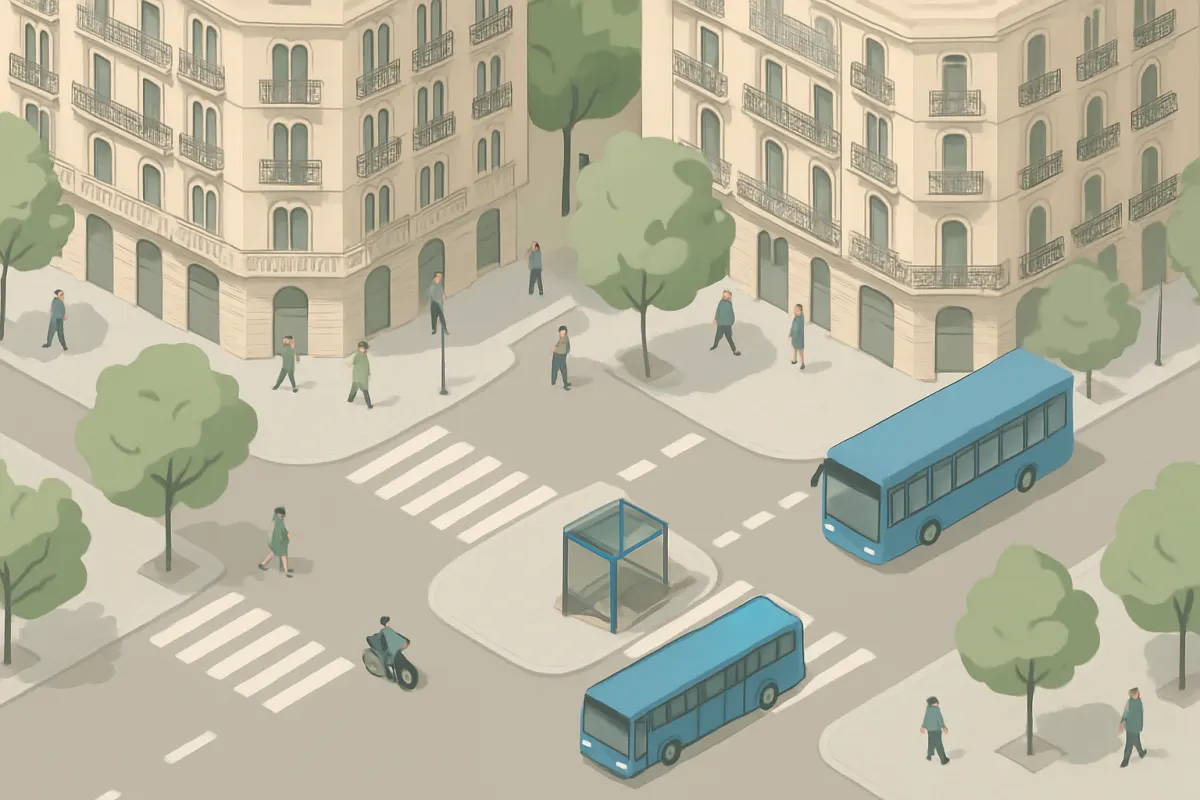
Carrer de Sants runs right through it and, together with Creu Coberta, makes up one of the longest shopping streets in Europe. Around it are tightly packed blocks where local families live.
Markets and trains
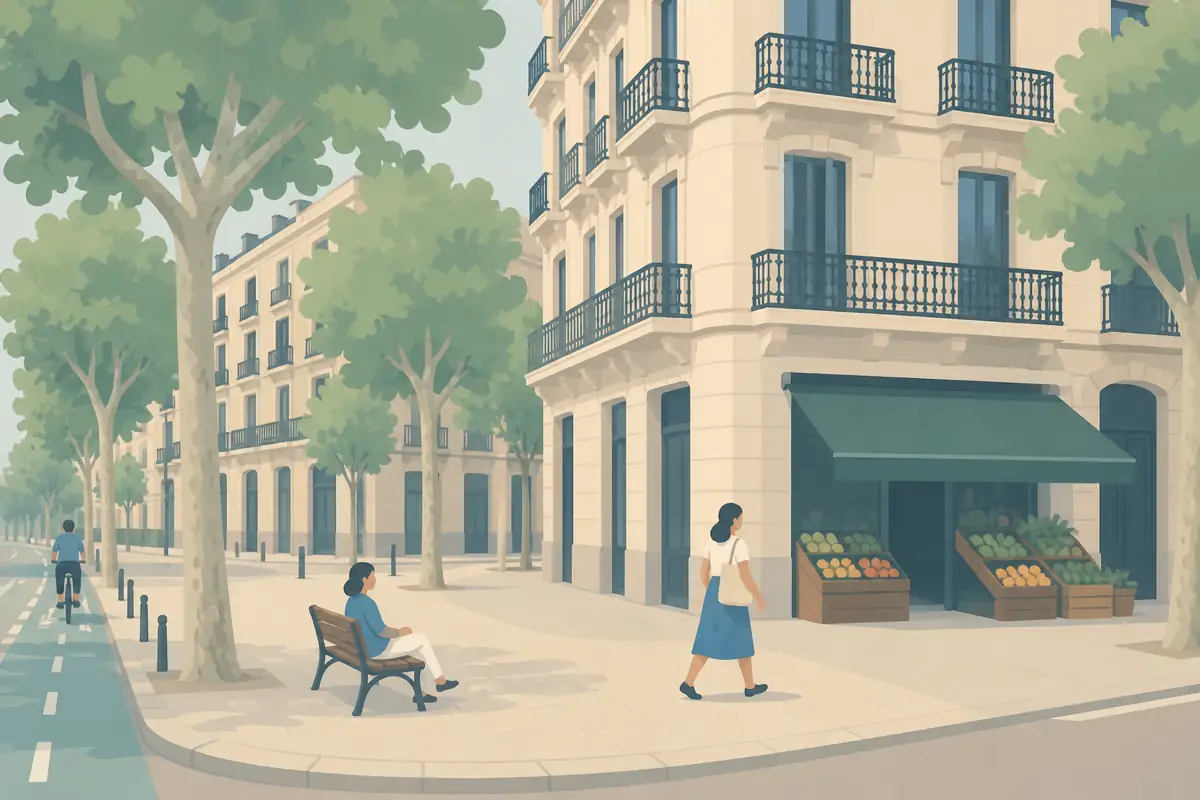
Everything for daily life is close at hand: two covered markets, hundreds of shops on the main street, bars, schools and health centres. Prices in the shops are lower than in the centre.
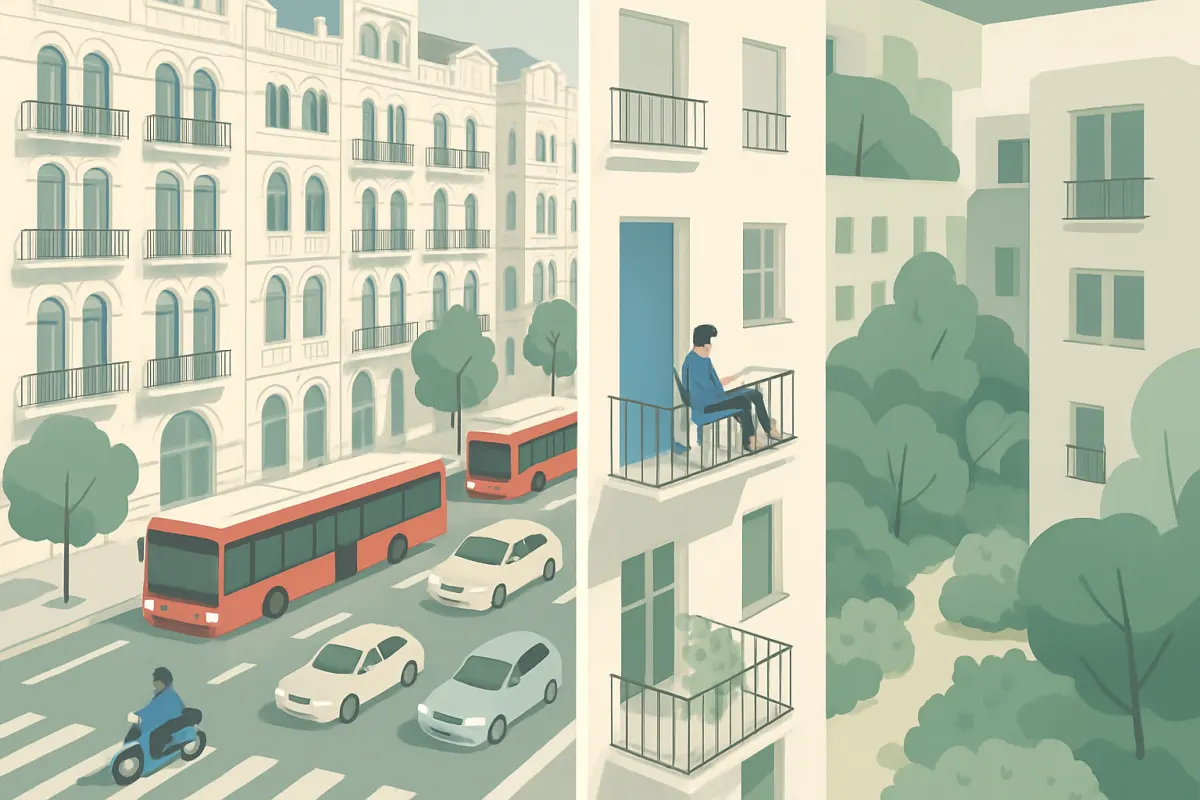
Transport links beat almost anywhere else in the city: several metro lines plus commuter and high-speed trains from the station. Greenery is thin on the ground, limited to a park on the site of an old factory and a garden built over the railway tracks.
Where we measured
We scored addresses on Carrer de Sants, Creu Coberta and Rambla del Brasil.
| Address | Score | Groceries | Station or stop | School | Park | Noise and air |
|---|---|---|---|---|---|---|
| Calle Sants 100 X 100, Barcelona | 86.3 | 3 min | 1 minPlaça de Sants | 2 min | 1 min | −7.7 |
| Carrer de la Creu Coberta, 60, Barcelona | 90.5 | 2 min | 2 minHostafrancs | 3 min | 5 min | −5.8 |
| Rambla del Brasil, 20, Barcelona | 87.1 | 3 min | 4 minBadal | 6 min | 5 min | −7.4 |
Points and table rows share numbers. Zoom with the plus button.
Sants gains for shops and transport and loses for parks. How the two balance out is shown on How the score works.
Who it suits
- Local families after a regular city neighbourhood.
- Tenants looking for rent below central prices.
- People who travel by train a lot.
What grates
The streets are dense, there is little green and the housing is basic. Around the station it is noisy and crowded. Residents praise the community spirit and complain about the lack of space.
No-frills buildings
Plain nineteenth- and twentieth-century buildings of four to six storeys, with no ornament. Flats are small. There are some sixties blocks and the occasional new build.
Viewing checklist
When renting in Sants, check the distance to the station: nearby is handy, right next to it is loud. Ask about the lift and the floor, and find out whether the windows face the main street or an inner courtyard.
Summer and winter
In summer the dense blocks get hot and shade is scarce. Winter is as mild here as in the rest of the city.
Without a car
Can you live in Sants without a car? Yes, and few parts of Barcelona make it simpler.
Families
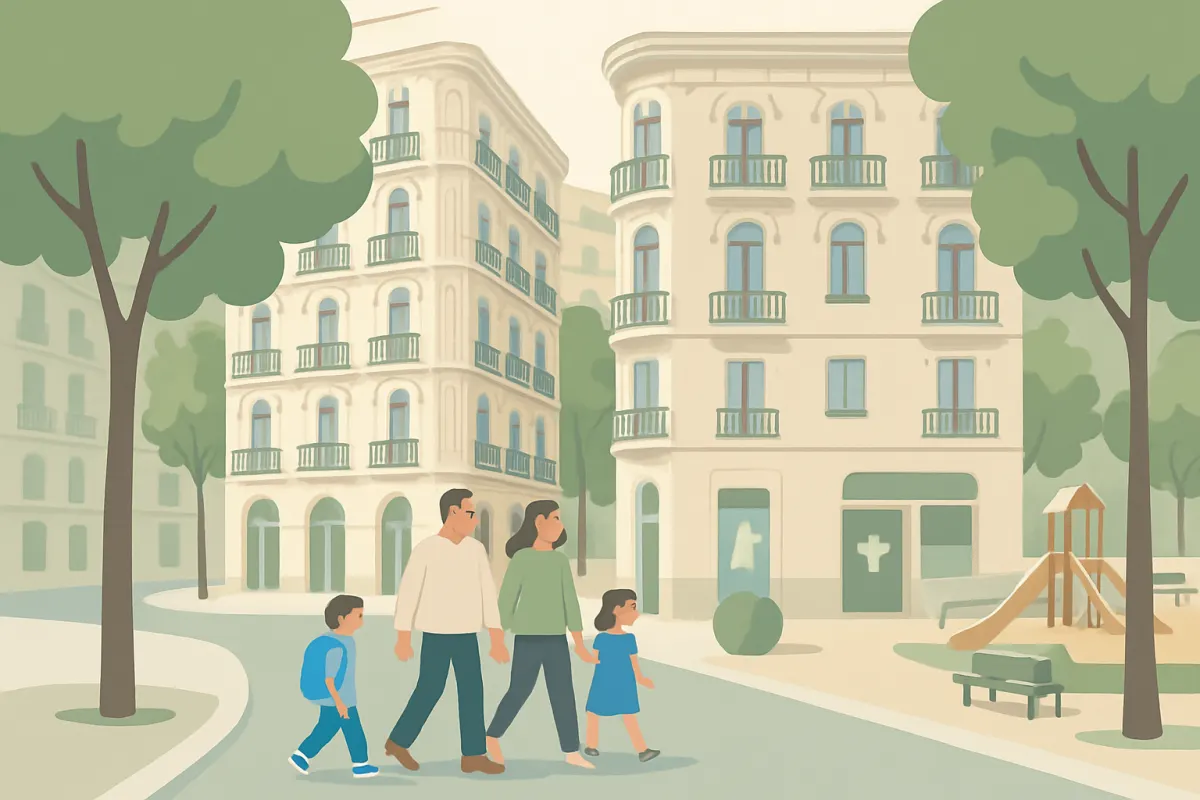
Sants has lots of families and traditions of its own: street festivals, children's sports teams and activities at the civic centres. Every block has a school nearby. Kids play in the old factory park and the garden over the tracks, and at weekends parents push prams along the main street. What is missing is space: there are no courtyards to play in, and for a big park you have to climb up to Montjuïc.
Neighbouring districts
To the east, Sants blends into the Eixample, and the border between them is barely noticeable. To the north lies Les Corts.
Questions
Is Sants a good place to live?
Yes, if you want an ordinary city neighbourhood without the tourist gloss: two covered markets, hundreds of shops on the main street, schools and health centres, and shop prices lower than in the centre. The blocks are dense, there is little green, and it is noisy around the station.
Is it easy to live in Sants without a car?
Easier than almost anywhere else in the city: several metro lines, plus commuter and high-speed trains from the main station. Living near the station is handy, but right next to it is loud, so check how far the flat is from the tracks.
Is Sants good for families?
Sants has lots of families and traditions of its own: street festivals, children's teams, activities at the civic centres and a school in every block. What it lacks is space: there are no courtyards, and for a big park you have to go up to Montjuïc.