Living in Sarrià, Barcelona: the quiet upper town
Living in Sarrià-Sant Gervasi, Barcelona: the old village of Sarrià, private schools, FGC trains and Collserola above. Three addresses scored on foot.
Score your own address
Everything this article covers, you can check on your own address: free, in a minute.
Free. The score at once, the full report after an e-mail sign-in.
Contents 10 sections
What the district is like
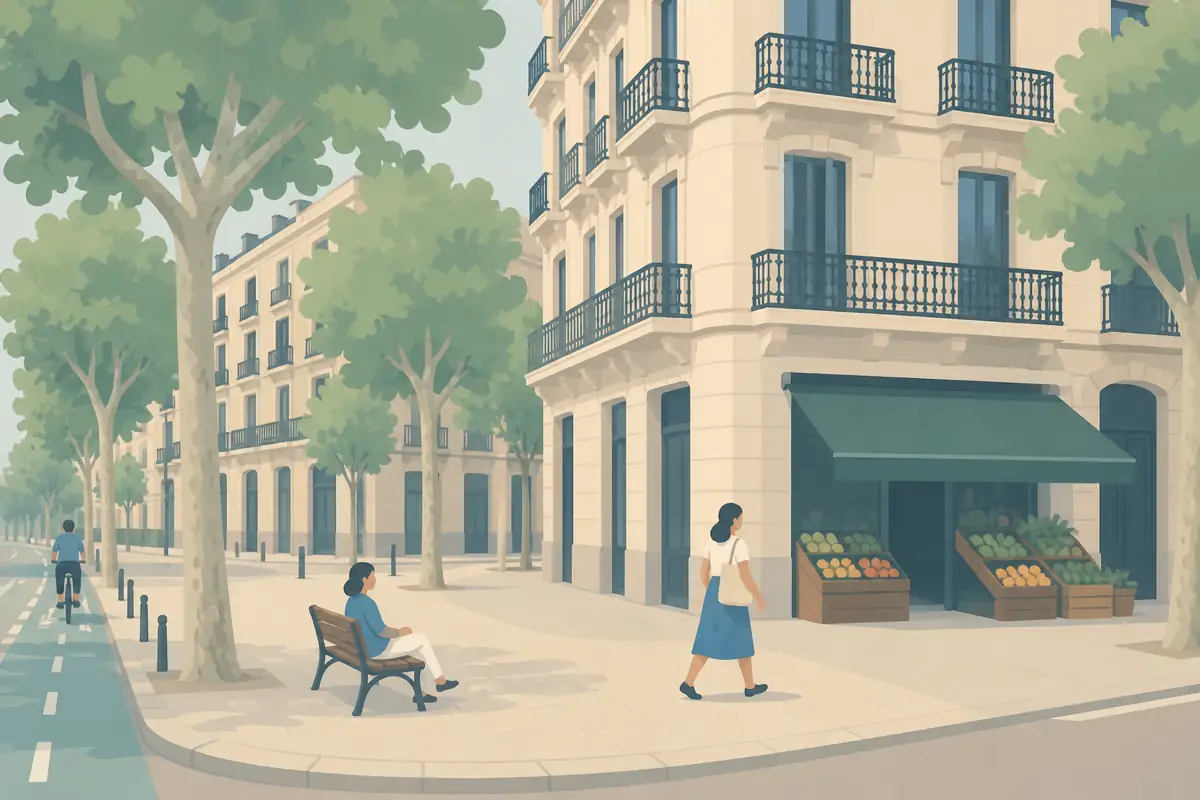
Sarrià-Sant Gervasi is the upper, wealthiest part of Barcelona, under the Collserola ridge. It takes in the old village of Sarrià with its high street and market, the Sant Gervasi quarters and the slopes of Tibidabo.
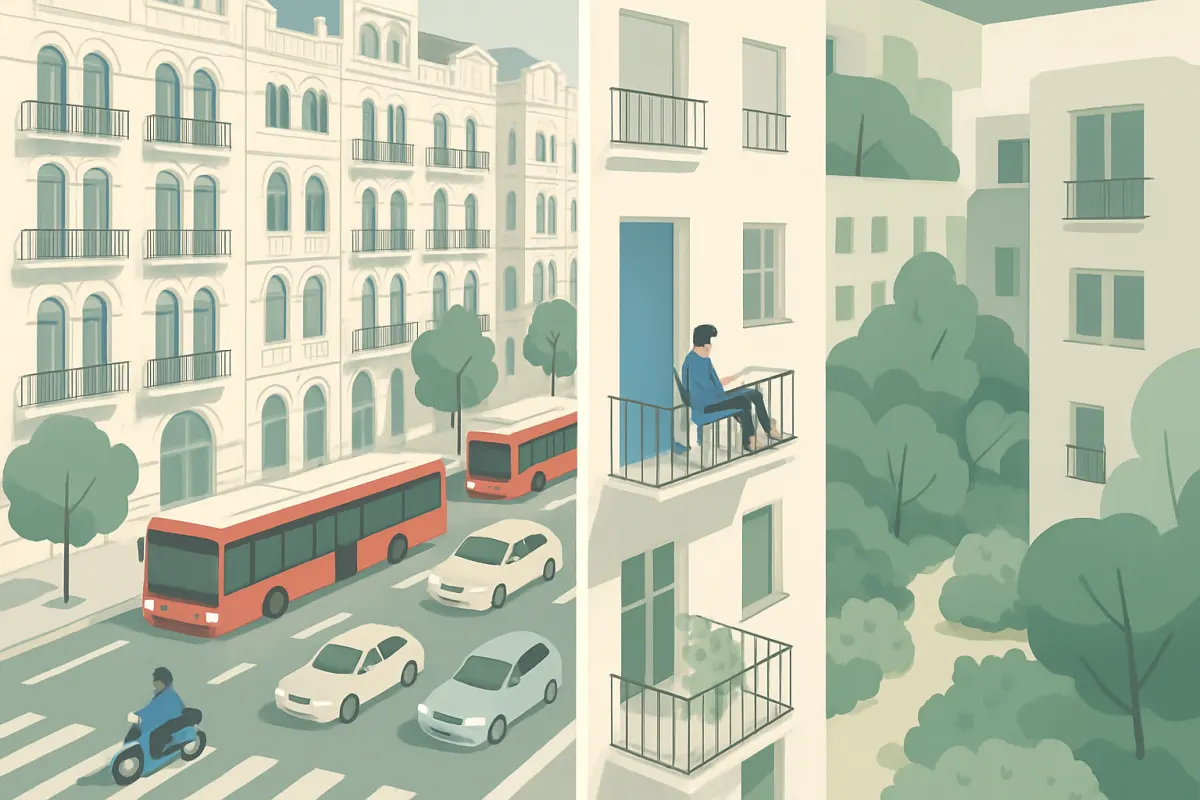
Barcelona's long-established families have always lived here. The streets are quiet and green, with gardens behind railings and a school on almost every block.
On foot
In old Sarrià and along Carrer de Muntaner everything is to hand: shops, pastry shops, clinics, the market. No other district has as many private and international schools.
The district is on a slope and you feel the climb. The metro barely reaches it; the FGC trains do the job, running under Via Augusta down to Plaça de Catalunya. There is a lot of green: gardens, parks and the Collserola woods above the houses.
What we measured
The addresses are Carrer Major de Sarrià, Carrer de Muntaner and Via Augusta.
| Address | Score | Groceries | Station or stop | School | Park | Noise and air |
|---|---|---|---|---|---|---|
| Carrer Major de Sarrià, 50-48, Barcelona | 89.5 | 2 min | 3 minSarrià | 4 min | 7 min | −2.4 |
| Carrer de Muntaner, 400, Barcelona | 87.5 | 3 min | 3 minMuntaner | 3 min | 4 min | −5.0 |
| Via Augusta, 200-192, Barcelona | 82.5 | 1 min | 1 minMuntaner | 4 min | 1 min | −7.4 |
Map numbers match the table rows. Use the plus button to zoom in.
In the station column here it is the train, not the metro. How slopes are counted is on How the score works.
Who it suits
- High-income families.
- Expat families with school-age children.
- People who put quiet and air ahead of being near the sea.
The trade-offs
It is expensive and hilly, and quiet at night, with few bars and restaurants. The beach and the old town are far. Residents call it a village inside the city and mean it as praise.
The housing
Blocks from the second half of the twentieth century with large flats, a garage and a concierge. In old Sarrià, low houses. On the slopes, villas with gardens. Sarrià real estate rarely comes cheap in any of the three.
What to check
Walk uphill from the station to the door. Ask whether the building faces Via Augusta or the ring road. See which school is close and how you get there.
With children
Children are the reason people come: schools a few blocks away, sports clubs and the Collserola trails within a walk.
Without a car
Near a station, yes. Further up the slope you start to need one.
Neighbours
Gràcia and the Eixample lie below. Over the ridge, on the same train line, is Sant Cugat del Vallès.
Questions
Is Sarrià-Sant Gervasi a good place to live?
For families who value quiet, greenery and schools, yes: it has more private and international schools than any other district, with the Collserola woods above the houses. The downsides are high prices, slopes, few bars, and a long way to the beach and the old town.
How do you get from Sarrià to central Barcelona?
By FGC train: the metro barely reaches the district, and the trains run under Via Augusta to Plaça de Catalunya. Without a car, live near a station; further up the slope you will need one.
What is housing like in Sarrià-Sant Gervasi?
Apartment buildings from the middle and late twentieth century with large flats, a garage and a concierge. Old Sarrià has low houses, and the slopes have villas with gardens. Before choosing, walk uphill from the station to the door and check whether the building faces Via Augusta.