Living in Almagro, Buenos Aires: central, unfussy
Living in Almagro, Buenos Aires: three addresses on Rivadavia, Corrientes and Yatay, minutes on foot to lines A and B and to Las Violetas café on Medrano.
Score your own address
Everything this article covers, you can check on your own address: free, in a minute.
Free. The score at once, the full report after an e-mail sign-in.
Contents 9 sections
What the barrio is like
Almagro sits right in the middle of Buenos Aires, between Avenida Corrientes and Avenida Rivadavia, just west of the Abasto. Together with Boedo it makes up Comuna 5.
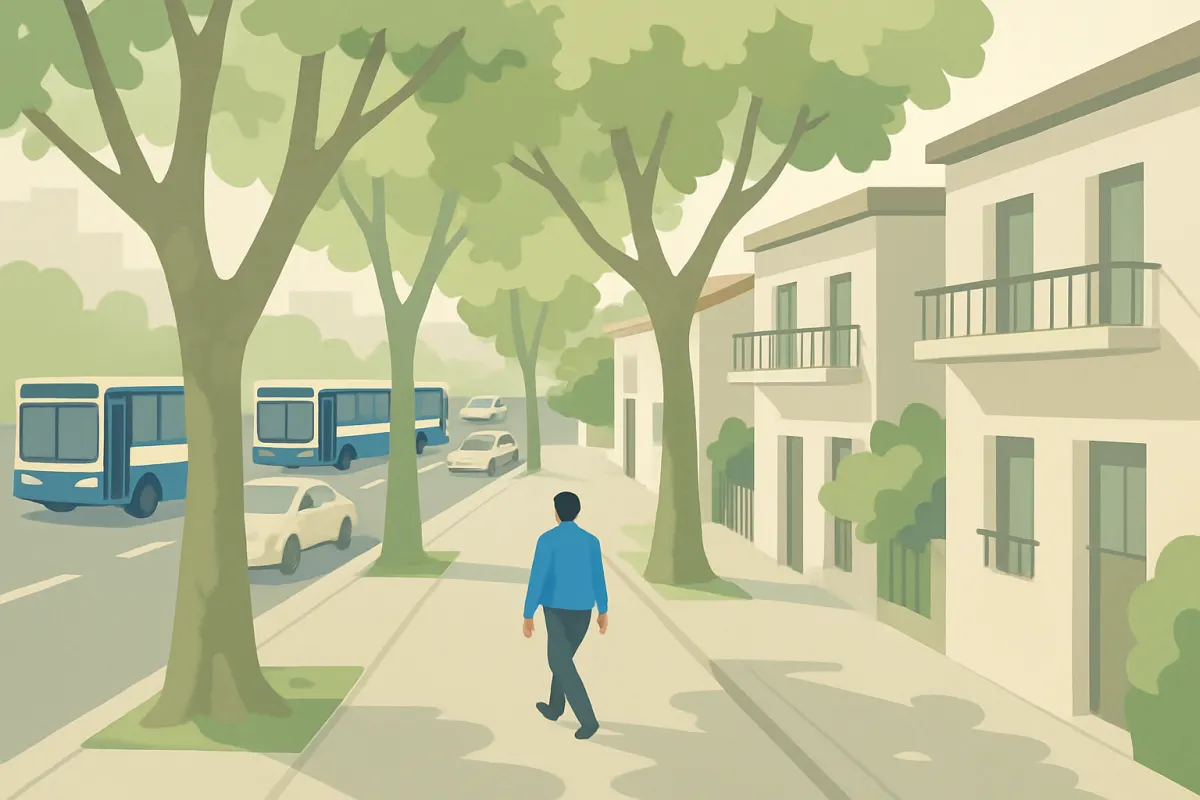
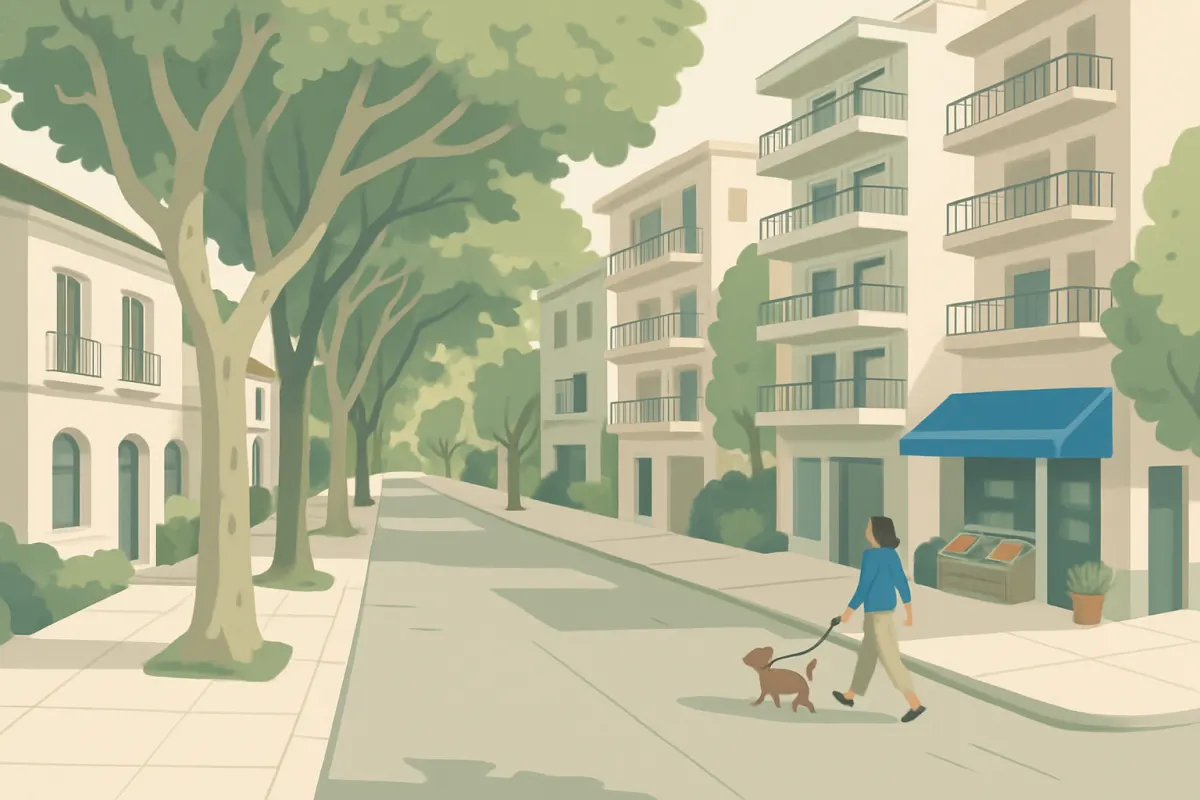
It has always been a middle-class place. The buildings are a mix of sixties and seventies blocks, PH houses with a back patio, old homes turned into flats and the odd new tower. Students, young couples, retired locals and families who never left all live side by side.
Daily life on foot
Most errands are a walk away. Rivadavia and Corrientes are lined with supermarkets, greengrocers, pharmacies, bakeries and bars. Hospital Italiano is in the barrio, and the Medrano campus of the UTN, the national technology university, fills the streets with students morning and night.
At the corner of Rivadavia and Medrano the old Las Violetas café still serves under its stained glass. In the evenings there are milongas and live-music bars, and people come to dance rather than to watch a show.
Green space is the weak point. There are small squares such as Plaza Almagro; for a proper park you walk to Parque Centenario in Caballito.
What we measured
We picked three addresses: one on Avenida Rivadavia near the middle of the barrio, one on Avenida Corrientes at its northern edge and one on Calle Yatay, towards Caballito.
| Address | Score | Groceries | Station or stop | School | Park | Noise and air |
|---|---|---|---|---|---|---|
| Avenida Rivadavia, 3900, Buenos Aires | 80.6 | 1 min | 1 minCastro Barros | 3 min | 3 min | −7.6 |
| Avenida Corrientes, 4100, Buenos Aires | 80.5 | 4 min | 2 minMedrano - Almagro | 2 min | 7 min | −8.6 |
| Yatay, 500, Buenos Aires | 90.3 | 7 min | 8 minÁngel Gallardo | 5 min | 5 min | −0.9 |
Map numbers match the rows of the table. The plus button brings each block closer.
Two avenues and a side street show how much the noise changes from one block to the next. The rules behind the score are on How the score works.
Who it suits
- Students at the UTN and other nearby faculties.
- Young professionals who work downtown.
- Middle-class families who want the subway at the door.
The trade-offs
The avenues are loud by day and by night, and some blocks have hardly a tree. Towards Balvanera a few streets look neglected and empty after dark.
Is Almagro safe? We do not measure crime. Walk the block at different hours and talk to people who already live there.
Cost of living
Renting or buying in Almagro usually costs less than in Palermo, Villa Crespo or Caballito, though it depends on the state of the building and how close the subway is. We quote no prices; compare current listings per square metre.
What to check
A flat at the back of the building or a PH on an inner street sleeps better than a balcony over Corrientes. Ask about the monthly building fees, the lift in older blocks and damp on the ground floor.
Getting around
Line A runs under Rivadavia, with Castro Barros and Río de Janeiro stations, and Line B runs under Corrientes, with Medrano and Ángel Gallardo. Plenty of buses cross the barrio, and the bike lanes take you downtown.
Neighbours
Villa Crespo is to the north and Caballito to the west. Boedo lies south and Balvanera east.
Questions
Is Almagro a good place to live?
Yes, if you want a central address without paying for a fashionable one. Almagro is a settled middle-class barrio with shops and bars on Rivadavia and Corrientes, two subway lines and Hospital Italiano close by. Housing usually costs less than in Palermo or Caballito, but parks are scarce and the avenues are loud.
How do you get from Almagro to the centre?
The subway is the easy way. Line A runs under Rivadavia from Castro Barros and Río de Janeiro stations, and Line B under Corrientes from Medrano and Ángel Gallardo. Many bus routes cross the barrio too, and cycling downtown on the bike lanes is a real option.
What kind of housing is there in Almagro?
Mostly blocks from the sixties and seventies, PH houses with their own patio and a few new towers. The quietest flats face the back or sit on an inner street. In an older building, ask about the lift, the monthly fees and damp on the lower floors.