Living in Chacras de Coria: a plaza among the vineyards
Living in Chacras de Coria, Mendoza: Italia, Viamonte and Bartolomé Mitre; only the plaza and its Sunday fair are walkable, beyond it no sidewalks.
Score your own address
Everything this article covers, you can check on your own address: free, in a minute.
Free. The score at once, the full report after an e-mail sign-in.
Contents 11 sections
What the place is like
Chacras de Coria is a village in the department of Luján de Cuyo, south of the city of Mendoza. The centre of the provincial capital is about fifteen kilometres away.
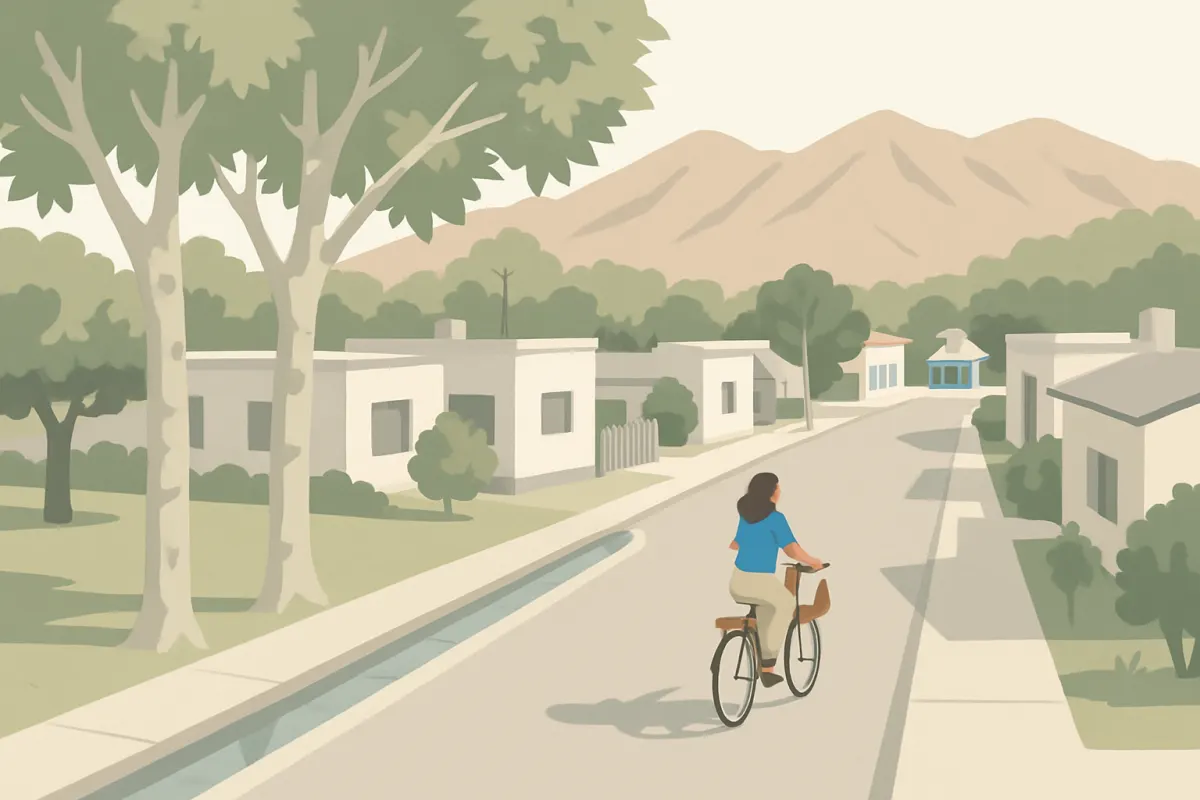
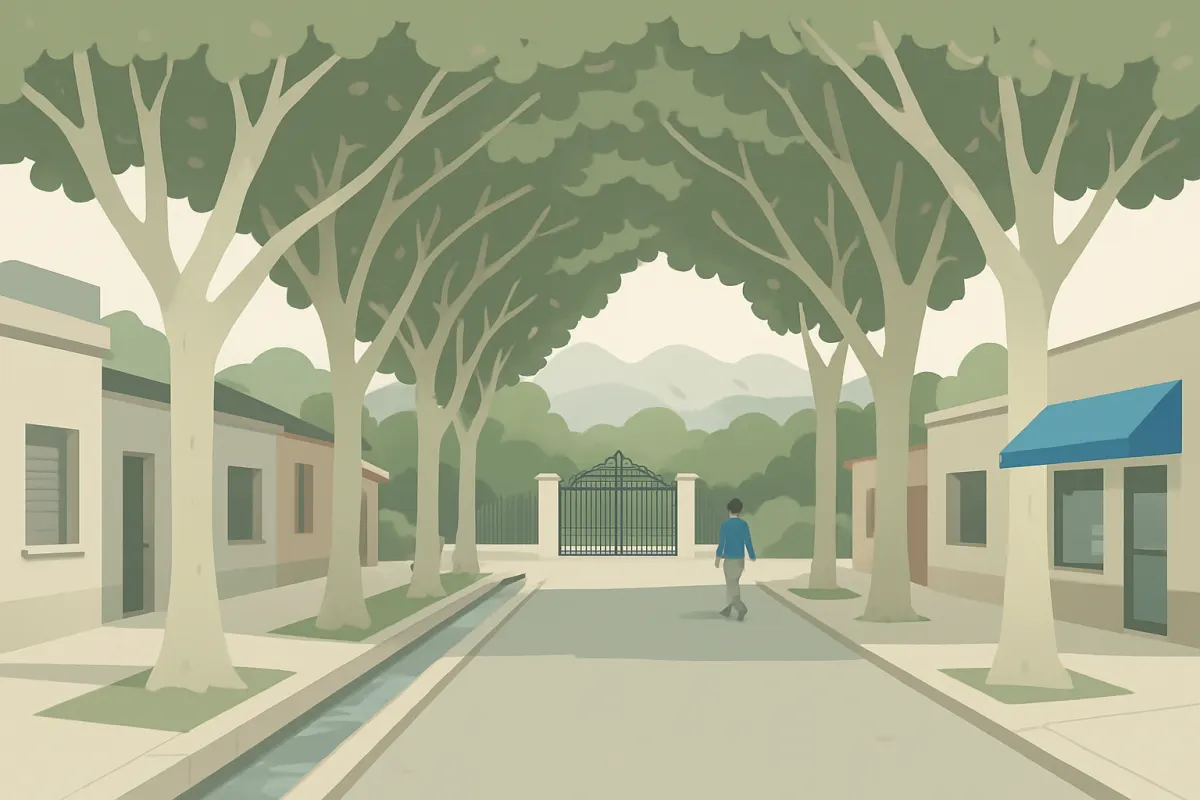
Mendoza families once had their summer houses here. What they left are the old trees, the irrigation channels and an unhurried pace. In the middle is a small plaza with a church, ringed by restaurants and cafes. The vineyards and wineries start next door.
On foot
Around the plaza you can walk: there are shops, a bakery, a pharmacy and restaurants. On Sundays there is a fair.
Everything else needs a car. The houses stand along long streets with no pavement, and schools, supermarkets and work are somewhere else. There are buses, but they are infrequent.
What we measured
The addresses are on Calle Italia, Calle Viamonte and Calle Bartolomé Mitre.
| Address | Score | Groceries | Station or stop | School | Park | Noise and air |
|---|---|---|---|---|---|---|
| Italia, Distrito Chacras de Coria | 53.1 | 5 min | 11 min | 2 min | 5 min | −4.0 |
| Viamonte | 53.0 | 5 min | 3 min | 6 min | 6 min | −4.2 |
| Bartolomé Mitre, 1361, Distrito Chacras de Coria | 58.5 | 3 min | 5 min | 3 min | 4 min | −0.6 |
Map numbers match the table rows. Use the plus button to zoom in.
The village gets little for what is within a walk and a lot for green. The reason is clear from How the score works.
Who it suits
- High-income families.
- Expats looking for a house and garden near the mountains.
- Retirees.
The trade-offs
It is far from the centre and expensive, and you need a car for everything. Residents see that as what quiet costs here.
The housing
Houses on large plots with a garden and pool, old country houses and gated communities. Chacras de Coria real estate includes almost no flats.
What to check
Drive to Mendoza on a weekday morning, not on a Sunday. Ask about the irrigation turn for the garden. Measure the distance to the plaza.
With children
Childhood here means a garden, a bicycle and a dog, and school is a drive away.
Summer and winter
In summer it is cooler than in the city: more trees and more water. Winter nights are cold. In spring, when the orchards blossom, and in autumn, at harvest, the village is at its best.
Without a car
Not possible: it takes one car for each working adult. Bicycles are for leisure, along quiet streets to the vineyards.
Neighbours
To the north is Godoy Cruz, the municipality the road to the capital runs through. Other places on our list are all inside the city.
Questions
Is Chacras de Coria a good place to live?
If you want a house with a garden among old trees, canals and vineyards, yes. The quiet has a price: central Mendoza is far, anything beyond the plaza needs a car and housing is expensive. There are hardly any flats, mostly houses on big plots.
How do you get from Chacras de Coria to Mendoza?
Almost always by car: two roads lead to the capital and both fill up in the morning. Buses exist but run rarely. Before renting, drive into Mendoza on a weekday morning rather than on a Sunday, when the road looks deceptively clear.
Is Chacras de Coria good for families with children?
Kids get a garden, a bike and a dog, and summers are cooler than in the city thanks to the trees and water. The one daily drawback is school: it lies outside the village, so children are driven there.