Living in San José, Zaragoza: across the Huerva
Living in San José, Zaragoza: an old working district east of the centre with family shops and cheaper flats. Who it suits and what to ask first.
Score your own address
Everything this article covers, you can check on your own address: free, in a minute.
Free. The score at once, the full report after an e-mail sign-in.
Contents 9 sections
An old working district
San José is a large residential district east of the centre of Zaragoza, beyond the Huerva river. It grew up around Avenida de San José in the mid twentieth century, as people came in from the villages to work, and the dense apartment blocks date from then.
People stay here for decades. Neighbours know each other, family shops, breakfast bars and workshops hold on at street level, and lately young couples priced out of the centre have started moving in.
A day in San José
Avenida de San José is the main street, with shops, a market and banks. Calle Miguel Servet and Avenida de Tenor Fleta carry a steady stream of cars and buses to the centre and the eastern districts.
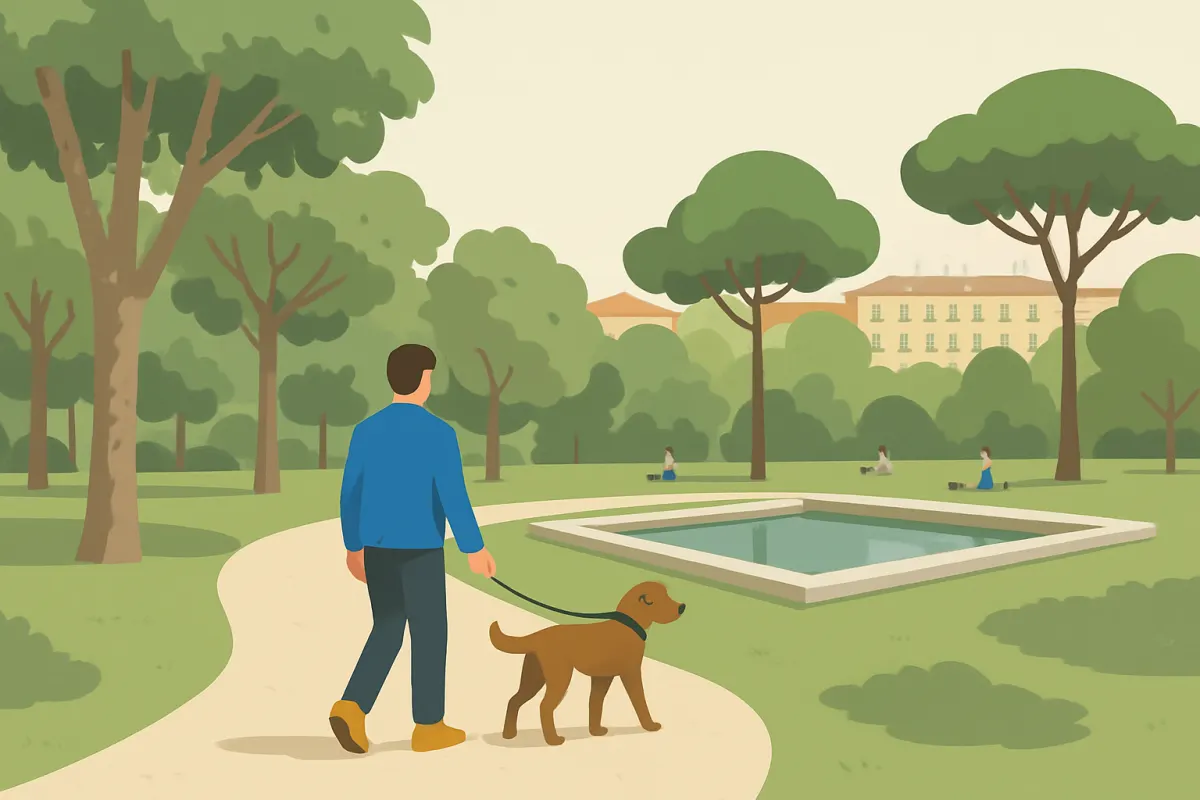
A walking and cycling path follows the Huerva south-west to the Parque Grande.
Our addresses
We measured Avenida de San José and two buildings on Calle Miguel Servet. One sits on the border with Las Fuentes; the other stands at the north-western edge, towards the Casco Histórico.
| Address | Score | Groceries | Station or stop | School | Park | Noise and air |
|---|---|---|---|---|---|---|
| Avenida de San José, 50, Zaragoza | 88.0 | 3 min | 2 minAvenida de San José 38 | 2 min | 5 min | −6.3 |
| Calle Miguel Servet, Zaragoza | 88.3 | 1 min | 3 minAvenida de San José 7 | 5 min | 3 min | −7.1 |
| Calle Miguel Servet, 60, Zaragoza | 88.1 | 3 min | 2 minMiguel Servet 37 | 5 min | 4 min | −5.9 |
Numbers on the map are table rows.
The housing
Blocks from the 1950s, 1960s and 1970s dominate, five to eight storeys high, with small flats and narrow stairs. A few old two- and three-storey houses remain. Many flats come on the market from the heirs of long-time owners and nearly always need renovating.
Who San José suits
- Families on a budget.
- First-time buyers.
- People who want to live close to the centre for less.
Pros and cons
Prices below the centre, shops on every block and a short trip to Plaza de España are the pluses. The minuses: old buildings, many without lifts, little green inside the blocks and heavy traffic on Miguel Servet and Tenor Fleta.
Is San José a good place to live? If you want a practical flat near the centre and do not mind some renovation, yes. If a courtyard and a new building matter more, try Actur.
Transport
There is no tram, but there are many buses, and you can walk into the centre over the Huerva bridges. A car is harder: by evening the kerbside spaces are gone.
What to check
Ask whether the building has a lift and when the roof was last redone. Find out if the windows face Miguel Servet, which is noisy from early morning. Look at the basement and at the shared heating bill.
Is San José safe? Crime is outside what we measure, so ask the people on your staircase about your street.
Neighbouring districts
West across the Huerva lies Zaragoza city centre; to the south-west is Universidad with the Parque Grande.
Questions
Is San José a good neighbourhood in Zaragoza?
It is a settled working district where neighbours know each other and family shops hold on at street level. Prices sit below the centre, which is drawing young couples. Expect older buildings, often without a lift, and heavy traffic on the main roads.
How do you get from San José to the centre?
Many residents simply walk in over the bridges across the Huerva. There is no tram, but plenty of buses run along Miguel Servet and Tenor Fleta, and Plaza de España is a short trip away.
What kind of housing is there in San José?
Mostly five- to eight-storey blocks from the fifties, sixties and seventies, with small flats and narrow stairs, plus a few old low houses. Many flats are sold by the heirs of long-time owners and almost always need renovating.
Is there any green space in San José?
Inside the blocks there is little. The main outlet is the walking and cycling path along the Huerva, which leads south-west to the Parque Grande in the neighbouring Universidad district.