Living in Kutaisi Centre: the square and the Rioni
Living in Kutaisi Centre: three addresses by Davit Aghmashenebeli Square, on Tamar Mepe, Tsereteli and Pushkin; the bazaar, pharmacies and park on foot.
Score your own address
Everything this article covers, you can check on your own address: free, in a minute.
Free. The score at once, the full report after an e-mail sign-in.
Contents 10 sections
What counts as the centre
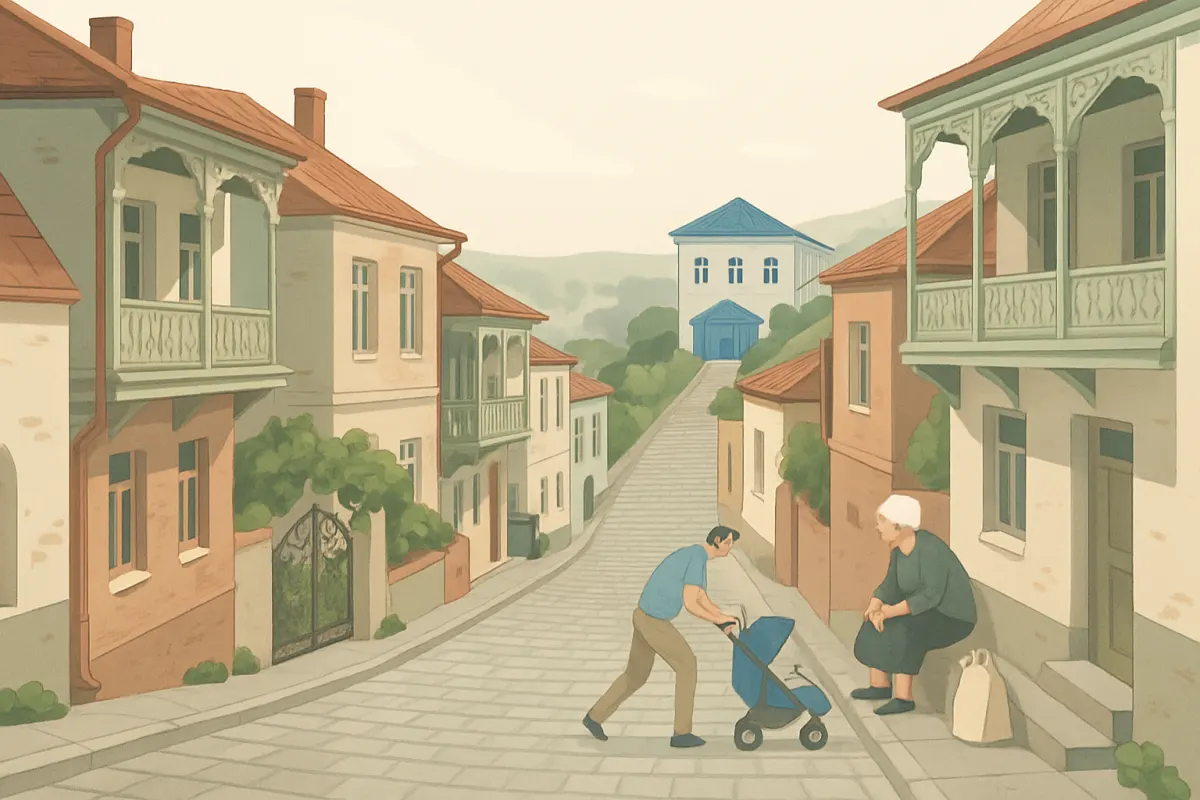
Kutaisi Centre is the cluster of streets around Davit Aghmashenebeli Square and its Colchis Fountain. Rustaveli Avenue, Pushkin, Tamar Mepe and Tsereteli streets fan out from here, and the Rioni runs along the west side. Across the river, Bagrati Cathedral stands on its hill.
This is a small city with one real centre. The theatre, the central park, the banks, the government offices and most of the cafes are here, and in the evening half the town gathers round the fountain.
Living on foot
You can do almost everything walking. The Green Bazaar, corner shops, pharmacies, khachapuri bakeries and barbers are a few blocks apart. Bridges cross the river, the White Bridge among them, and on the far bank begins the quiet old quarter on the hill.
Marshrutkas to the suburbs and other towns leave from the centre. Trains and long-distance buses do not leave from the square: you take a marshrutka or a taxi to the railway and bus stations, and the same goes for David the Builder airport.
What we measured
All three addresses are close to the square: a house on Tamar Mepe Street, one at the start of Akaki Tsereteli Street, and a block on Pushkin Street with a bank on the ground floor.
| Address | Score | Groceries | Station or stop | School | Park | Noise and air |
|---|---|---|---|---|---|---|
| Tamar Mepe Street, 20, Kutaisi | 84.5 | 1 min | 2 minKorkias Kucha | 6 min | 5 min | −4.7 |
| Akaki Tsereteli Street, 20, Kutaisi | 83.2 | 4 min | 3 minMusikaluri Skola | 5 min | 5 min | −3.8 |
| Alexander Pushkin Street, Kutaisi | 84.5 | 3 min | 6 minKarvasla | 6 min | 3 min | 0.0 |
Map numbers match the table rows. Zoom in with the plus button.
The handiest comparison is with Balakhvani next door. Everything else about the table is on How the score works.
Who it suits
- Students and staff of the local universities.
- Remote workers who want Georgia for less than Tbilisi costs.
- Retired people who want the market, a doctor and a park close by.
The trade-offs
The buildings are old: pre-revolution houses and Soviet blocks, renovated to very different standards. Cars and marshrutkas crowd the square and daytime is noisy. Large supermarkets are few, and people drive to the outskirts for them.
The housing
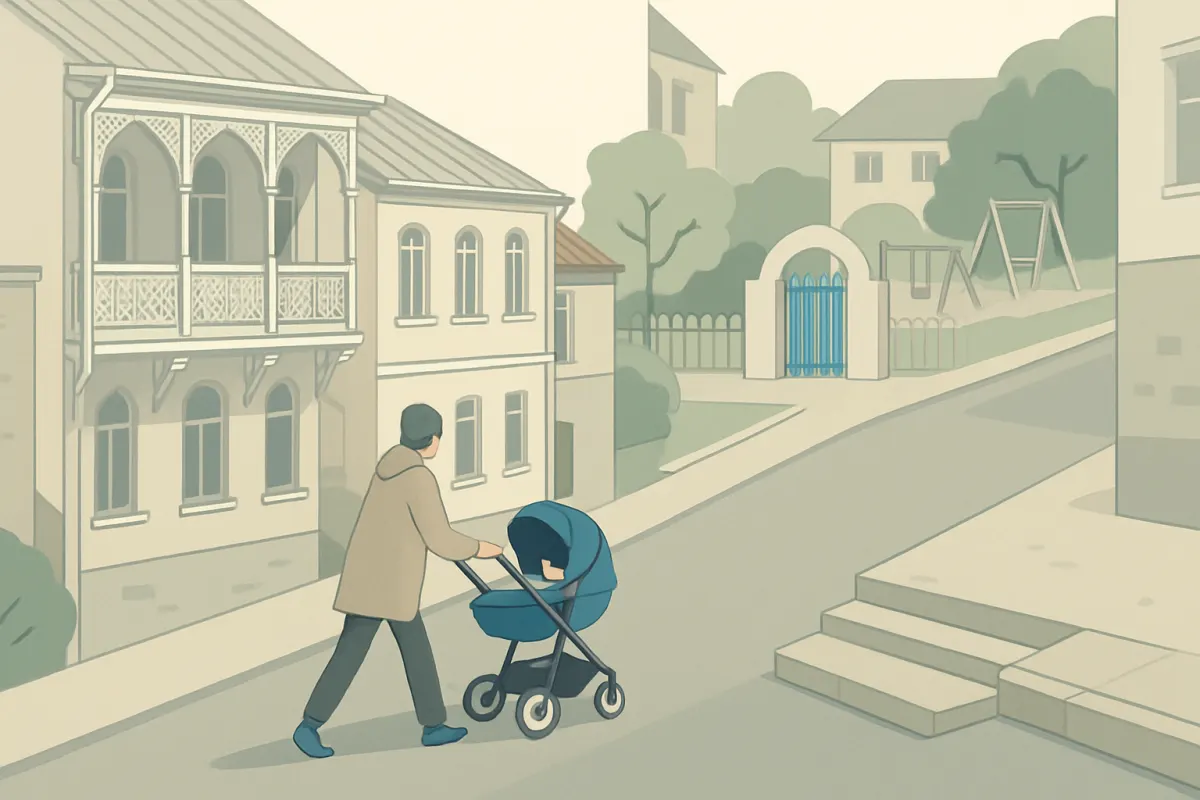
The side streets still have two-storey houses with wooden balconies and shared courtyards. The main streets have Soviet blocks and the odd new building. Flats in the old houses often have high ceilings but little insulation.
What to check
Ask how the flat is heated: there is no central heating, so expect a gas boiler or electric heaters. Look at the walls near the floor and under the windows, since damp is common. Find out whether the windows face the square or the courtyard. Walk up the stairs, because many buildings have no lift.
Safety
We do not measure crime. If it matters to you, walk from the door to the square after dark and see how well the streets are lit.
Summer and winter
Kutaisi summers are hot and humid; thick walls and shady trees help in the old houses. Winter is mild but wet, and an unheated flat makes it feel long.
Neighbouring district
South along Tsereteli Street lies Balakhvani, a quieter residential quarter.
Questions
Is central Kutaisi a good place to live?
Yes, if you want to do nearly everything on foot: the Green Bazaar, pharmacies, the theatre, the park and cafés are a few blocks apart. The trade-off is old buildings of uneven quality and daytime traffic and minibuses around the square.
How do you get from central Kutaisi to the station and the airport?
Marshrutkas to the suburbs and nearby towns leave from the centre itself. The railway station, the bus station and David the Builder airport are not on the square: take a marshrutka or a taxi.
How are flats heated in central Kutaisi?
There is no central heating; flats run on a gas boiler or electric heaters. Winters are mild but wet and old walls often get damp, so look at the corners near the floor and under the windows before renting.
Who is central Kutaisi best for?
Students and university staff, remote workers who want a cheaper life in Georgia than in Tbilisi, and retirees who like having the market, a doctor and the park nearby. All of them gain from doing nearly every errand on foot.